
She who mends the realm’s torn edges, stitching service into every seam, needle in one hand and a ledger in her care. Hearth-work guardian and duty-bearer. The tireless hands of Elseby Möröi, keeper of coin. A Silver Wheel bestowed today, October 24 AS 61 at the Crown Tournament of King Ozurr and Queen Hemma .
GNEW and Pennsic- The Great Morley Boogaloo
It’s been since 2009 since I have headlined a concert or really felt like myself as a performer. Over the years, I have been backing myself down to do more ensemble playing. I continued to do solo performances but nothing really too large. I did also step down for the second time as Consorts Bard this past year and that opportunity gave me multiple solo experiences and opportunities. However, at the suggestion of Richard Heyworth, it was time to get my big girl britches back on and really get up and do what makes me happy and feeling competent as a performer.
With some rabbit holes dove into, we found this book of Canzonettes ( a short, lively, and cheerful song. The word comes from Italian as a “little song,” derived from canzone) for 2 voices. This was composed by Thomas Morley. Where this was not quite solo work, it still gave me the opportunity to perform each piece and also play with friends. I decided I was going to learn the -entire- book. This was 12 pieces of vocal music which ran about 30 minutes solid of music with no breaks taken. That… is a lot. I, again, have not done that much solid singing since 2009 when I gave my senior recital at school for my undergraduate degree. The largest challenge I was facing was not the difficulty of the music, but the physical changes to my instrument that started in 2022. Let me talk a little more about this.
The human voice is not a solitary instrument. It is effected by it’s housing. Weight loss can change the shape and amount of soft tissue surrounding the throat, mouth, and vocal tract. This can alter how sound resonates. Your voice isn’t produced only by the vocal cords. It is produced by the throat, mouth, tongue, and nasal passages act as a resonating chamber. Changes in surrounding tissue can subtly change the sound. Significant changes in body composition can potentially affect the tissues supporting the vocal folds, which may influence pitch or vocal quality. Weight loss can affect breathing mechanics and respiratory support, which can make the voice sound different or change how easily you project. If the weight loss is substantial or occurs rapidly, changes in nutrition or hormones can sometimes affect the vocal folds and muscle strength.
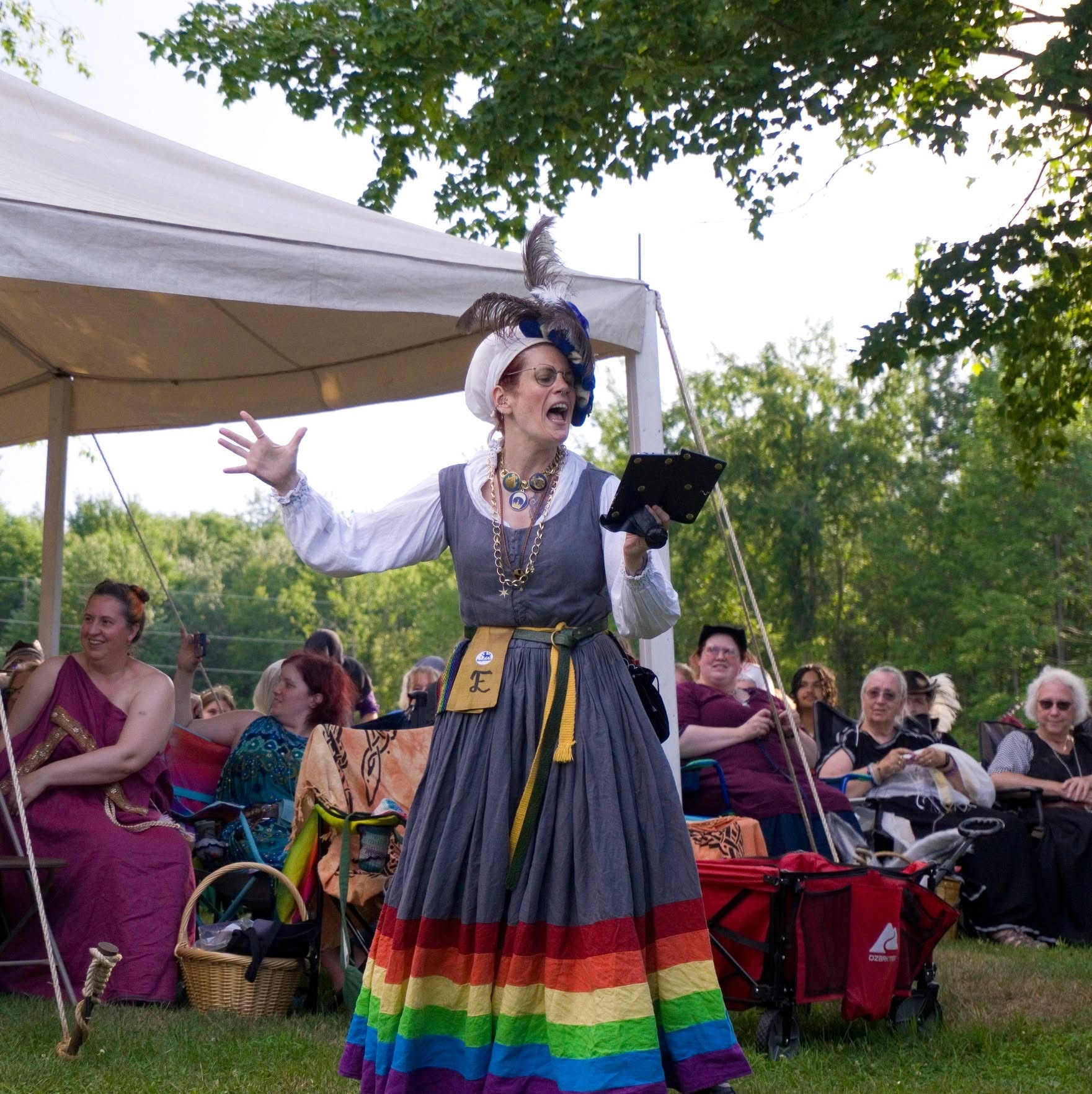
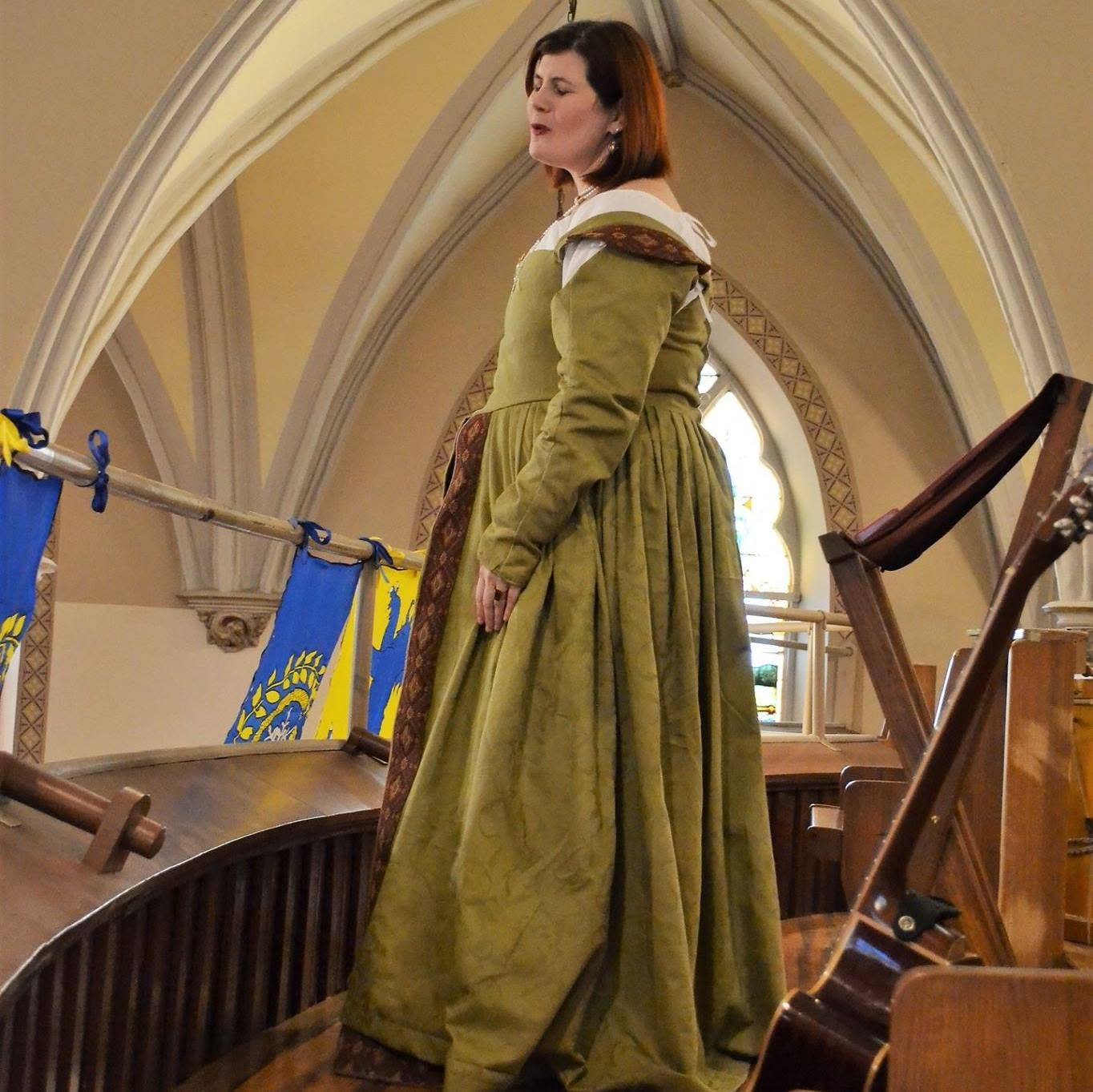
This then becomes a very sensitive subject for me because my voice has been a lot of my identity. Neither here nor there, I moved forward with this project. I reached out to a few friends of mine to see if they would be interested in singing/playing some of these pieces and was greeted with excited responses of yes.
As I pursued this project, I also decided to see if there was something more to the canzonettes. Sure as the sun shines there was some good gossip behind the canzonettes. If you, gentle reader, are interested, click this link below:
Preparing for the concert was a bit more of a trial. I could control my own singing but how was I to know if my volunteers would be ready and in action. One performer was in North Eastern MA, one in South Western NH, another in Western MA and one in Michigan.
What I had planned was not what in the end happened. We got to GNEW and one of my performers, the night before the concert, advised they could no longer be there. So, that left me with a 9am emergency rehearsal with one vocalist and one instrumentalist. The other vocalist was only slotted for Pennsic. No one seemed to notice that this was a change and I am quite thankful for that. This was a dry run for Pennsic.
Now, we get to Pennsic. Friday afternoon, the sun. HOT. We managed to get set up and I think I am smart enough to not schedule any rehearsal time. Friday was just about getting into headspace for a weekend of Arts and Sciences into the concert. However, this is not before serving as our rapier champion.
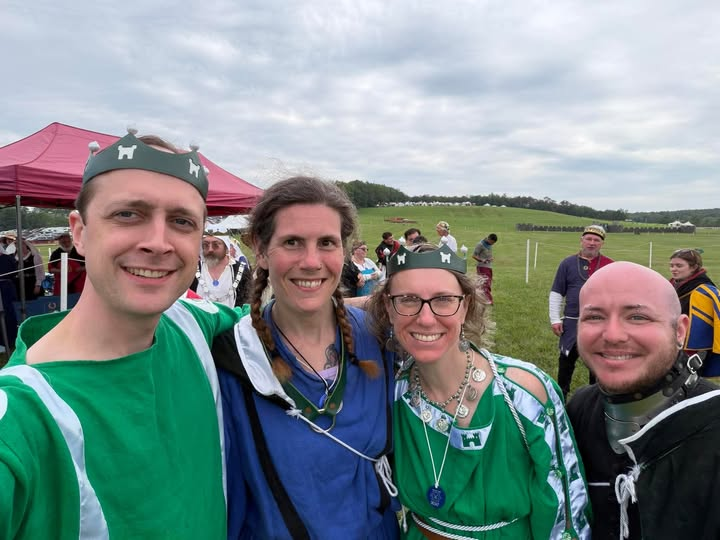
I think it’s really important to be versed in something else outside of your art so that you have something for your head to retreat to when the brain weasels are bad. For me, this is fencing. This was the start to my Saturday. Above is an image of our amazing Excellencies and my most excellent partner in crime, Corso, Baroness’ champion of fence after both of us won our exhibition bout. Neither of us won the tournament, but I had received feedback from many of the landed that I was a fun looking fight, chivalrous and though appearing somewhat demure they could see the mischief in me.
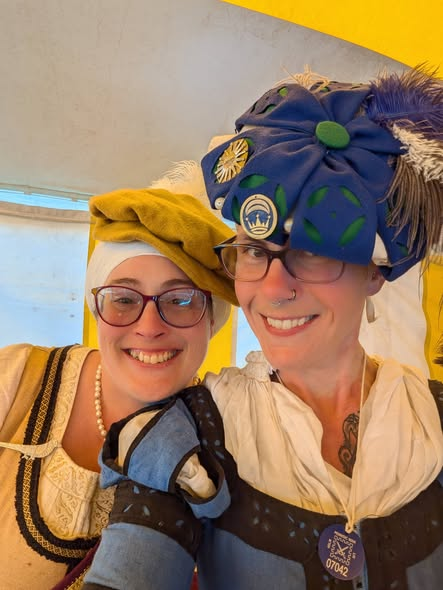
From there went back to rehearsals. I met with my vocalist from Western MA, Cecelie. An hour put in plus the occasional chatting and I was feeling better about our performance.

Opening Ceremonies are always so fun and full of pomp.
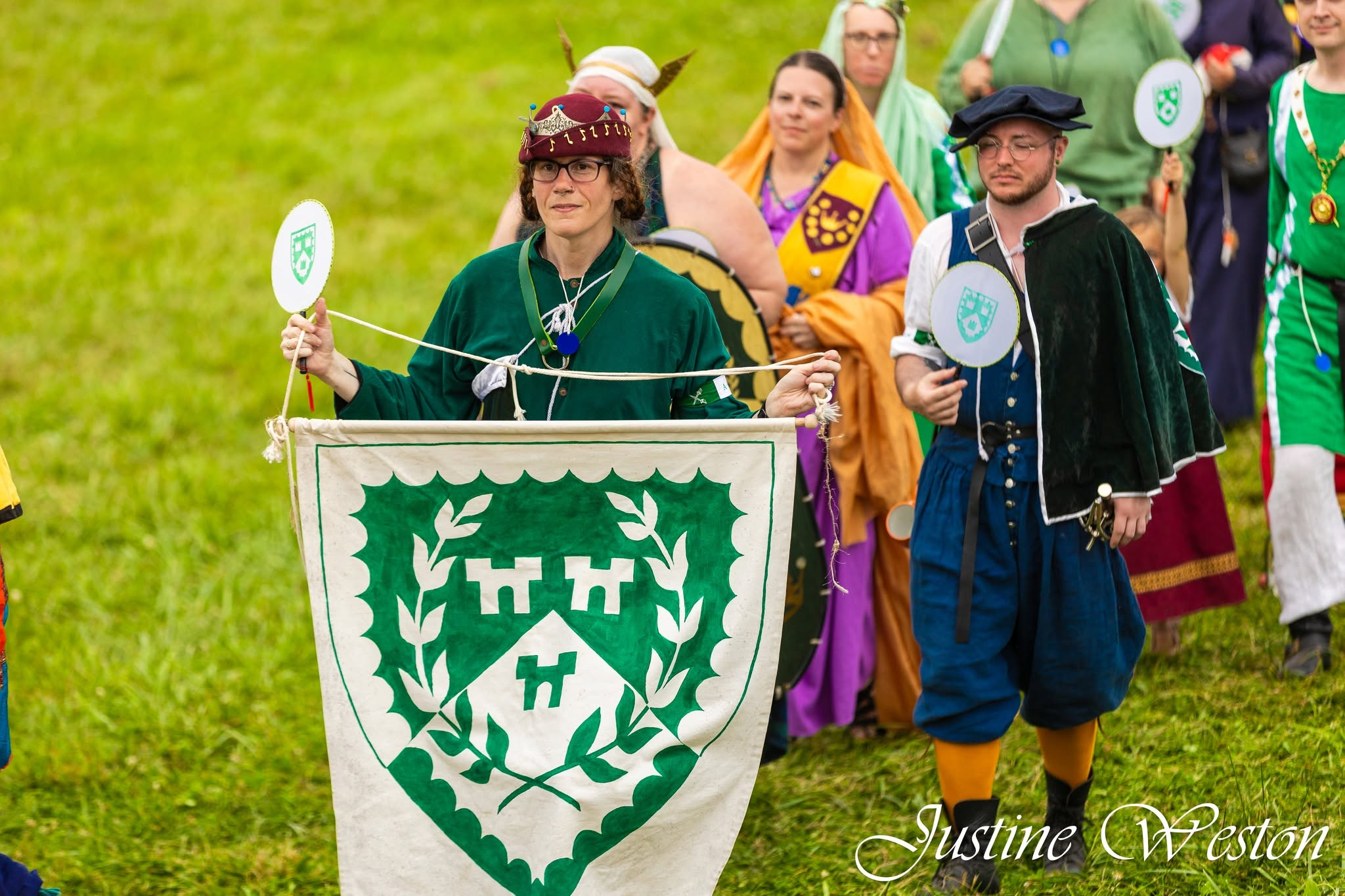
That evening I made my pilgrimage to the B blocks to perform at Caoilfhionn’s Bardic Circle. I had been performing at this the last several years. I never will miss this Bardic. Her grace has made this a safe and welcoming performance space. I feel safe bringing everything from period pieces to trad to things I have composed myself. Each time, something new. My little cheater night to really sing and make sure I am keeping my instrument healthy and safe. It’s rough with all the talking and dust that happens at Pennsic.
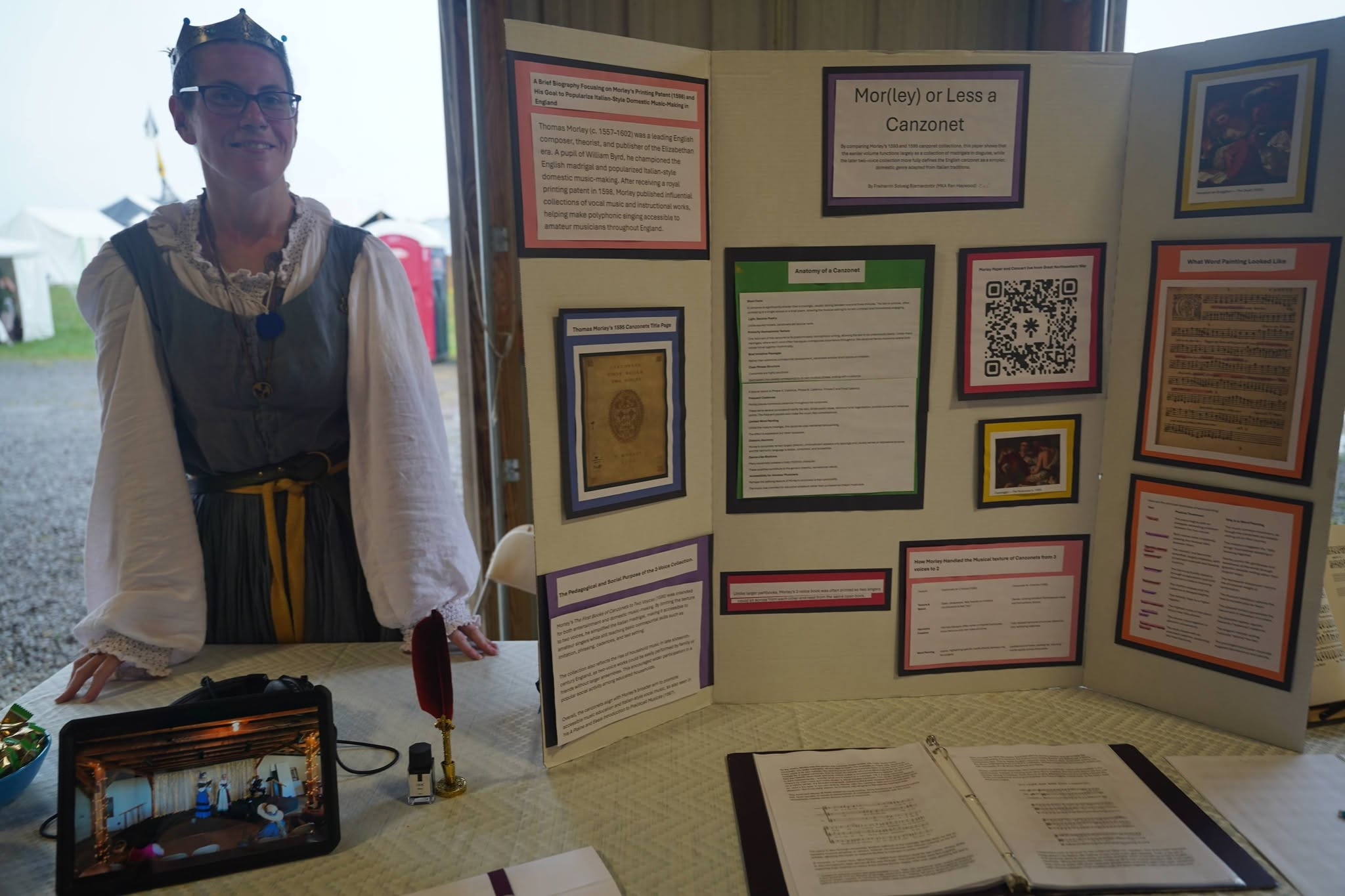
Sunday was now once again shifted for focus. I decided to display my concert
(Videos of Morley Concert from GNEW)
from GNEW and the paper I wrote (posted above). I typically don’t display my work. I have been very disheartened by people who simply don’t stop by because I don’t have something pretty to touch or taste. I decided this was going to be different. I sat with my display mostly from 12-5, however during that time I was also able to provide a consultation to a newer scadian. Their work was also music related and I lit up when I was able to see what they were working on. I am ashamed to say I didn’t get their contact info outside of their email that they already provided but they are working on some -great- stuff. Their work was reassembling and piecing together the Casulana Madrigals. Where, if you look at my paper above, you will get an idea of why this was an area of interest based on my works of Cazonettes.
The day rolled around and it was time to prepare with my other vocalist. Well, life happens. They had lost their voice so it was time to reconfigure the concert. Thank goodness that Richard, my recorder player, who also played with me at the GNEW concert not only was on site at Pennsic, but he was camping within my camp group. Coach is putting you back in buddy to pinch hit! (Is that how that sports terminology works?)
Later, with little time to rehearse, we did sort of a cheater rehearsal. That night I was slated to play for Runnymede dinner. What better way to practice than on an instrument you are not using for the concert. Whatever. It was an excuse to play. That night Richard, Cecelie and I played through the Morley concert on recorder just to keep the music in our bones. It also made for lovely background music as well outside of the other books we typically play out of. The day was long and I needed preserve my voice since I had another busy day with the concert being the next day, Monday.
Monday…. the big day arrived. What a better way to start the morning than serve as a scorer for the A and S War Point. I was honored to have been asked to do so. I was able to review two very different but exciting performance pieces of which I learned a lot from. One, a Sackbut/Slide Trumpet presentation and the other a vocal piece from the Minnesingers. I gifted each with a small trinket dish because competing and the amount of work that goes into a performance piece is close to my heart and I wanted to celebrate each of the folks I scored.
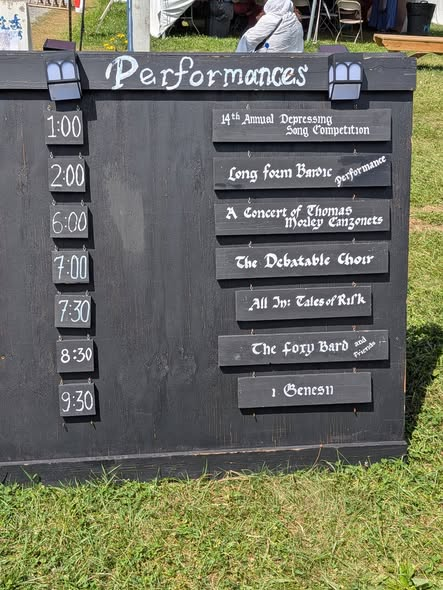
Then, that night… 6:00 pm rolled around and it was time. This concert felt easier than the concert at GNEW. This is why we have rehearsals right……RIGHT?!?!?!
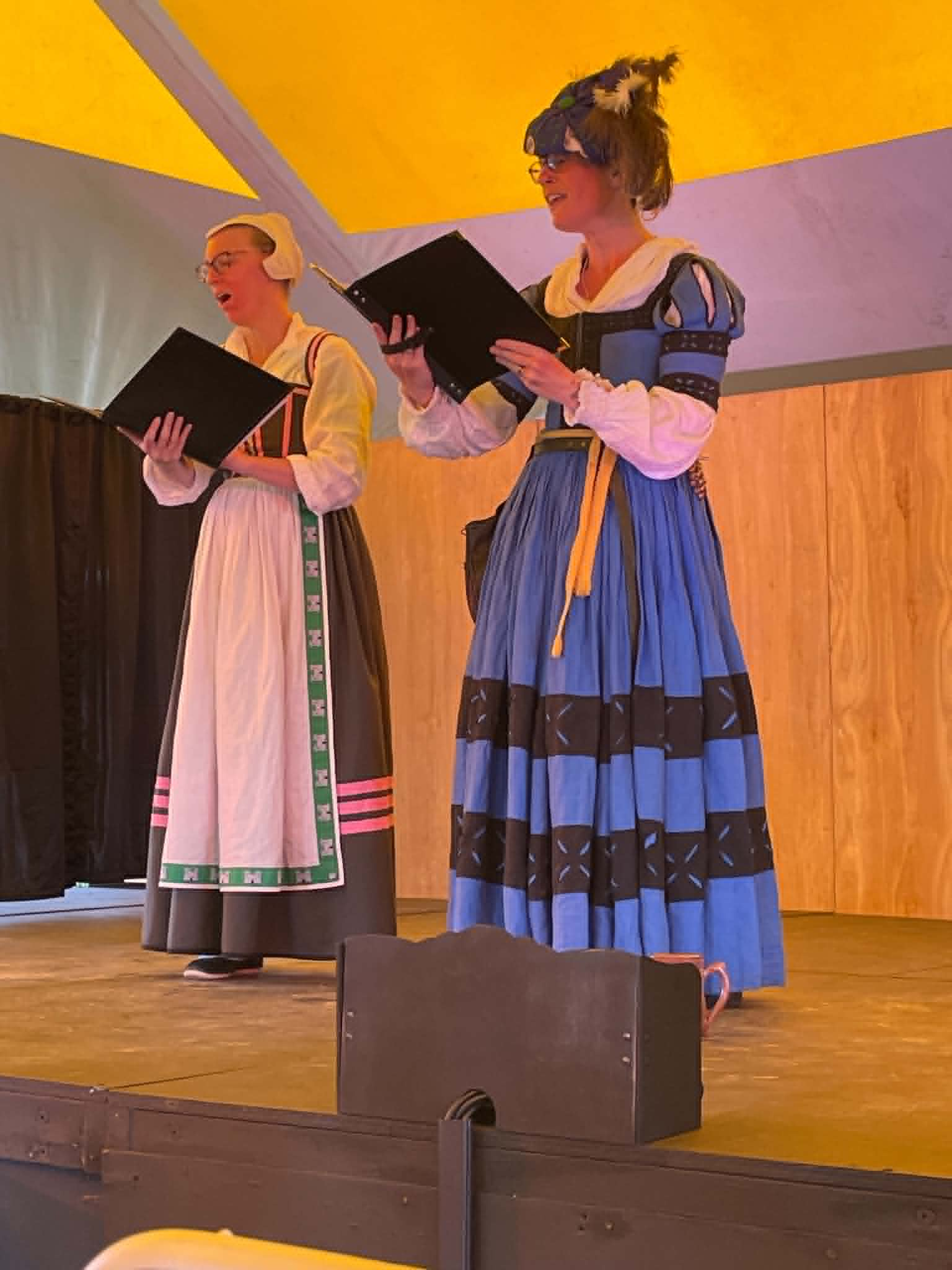
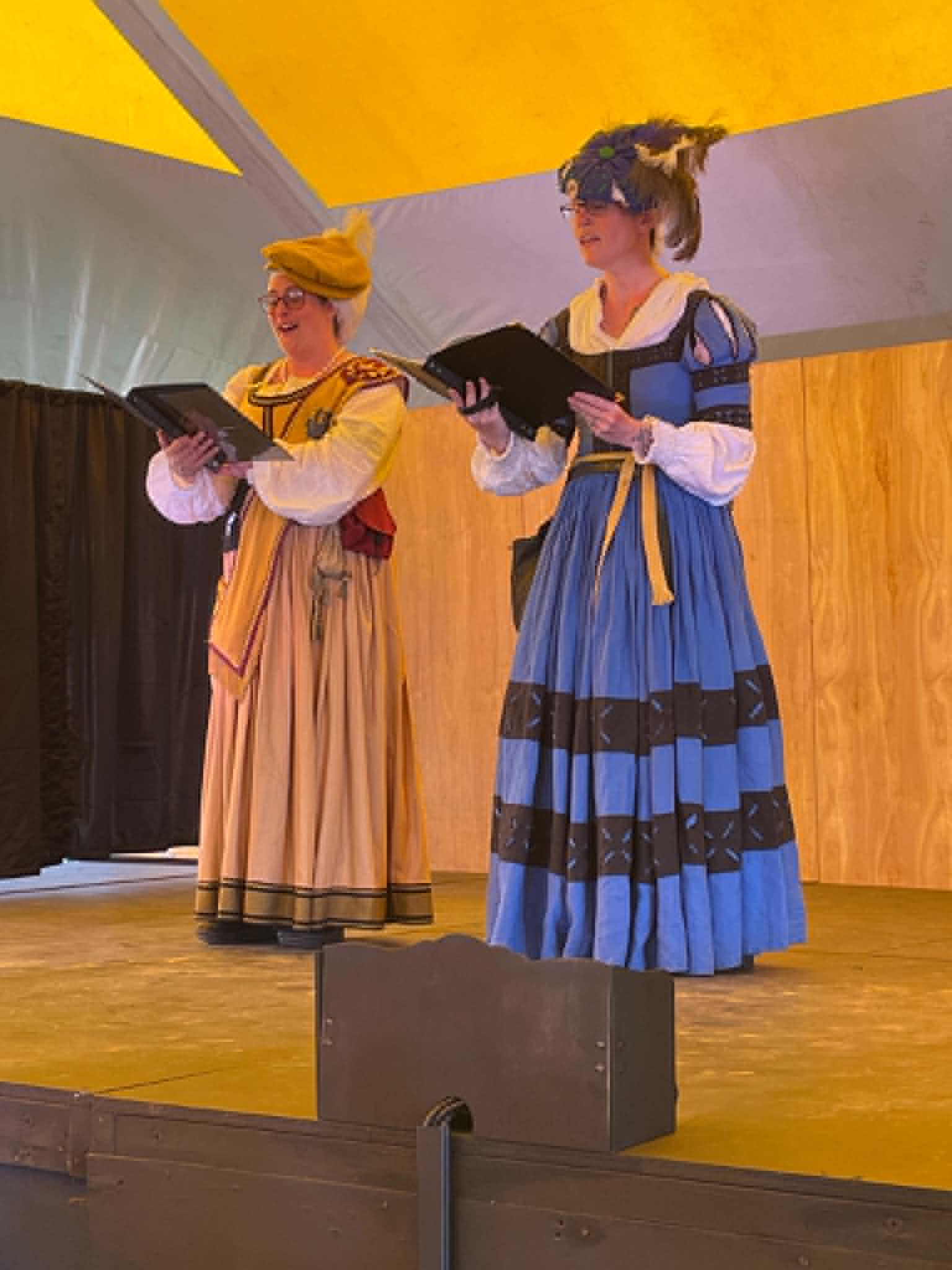
I have most of the concert here, but part of it was lost due to technical errors with recording… which is ok. We have -all- the pieces from GNEW.
Outside of court on Tuesday, where I had made 3 medallions for folks who are close to me, Wednesday was my last day of productivity for me and my music soul.

Wednesday was my Laurel, Sabine’s Birthday. We had talking about just getting together and playing and it just so happened that Wednesday worked out for me. I also invited Richard along because he could also use an outlet away from his 4 year old for a few hours. We ended up playing for about 2 hours and it was just so good!
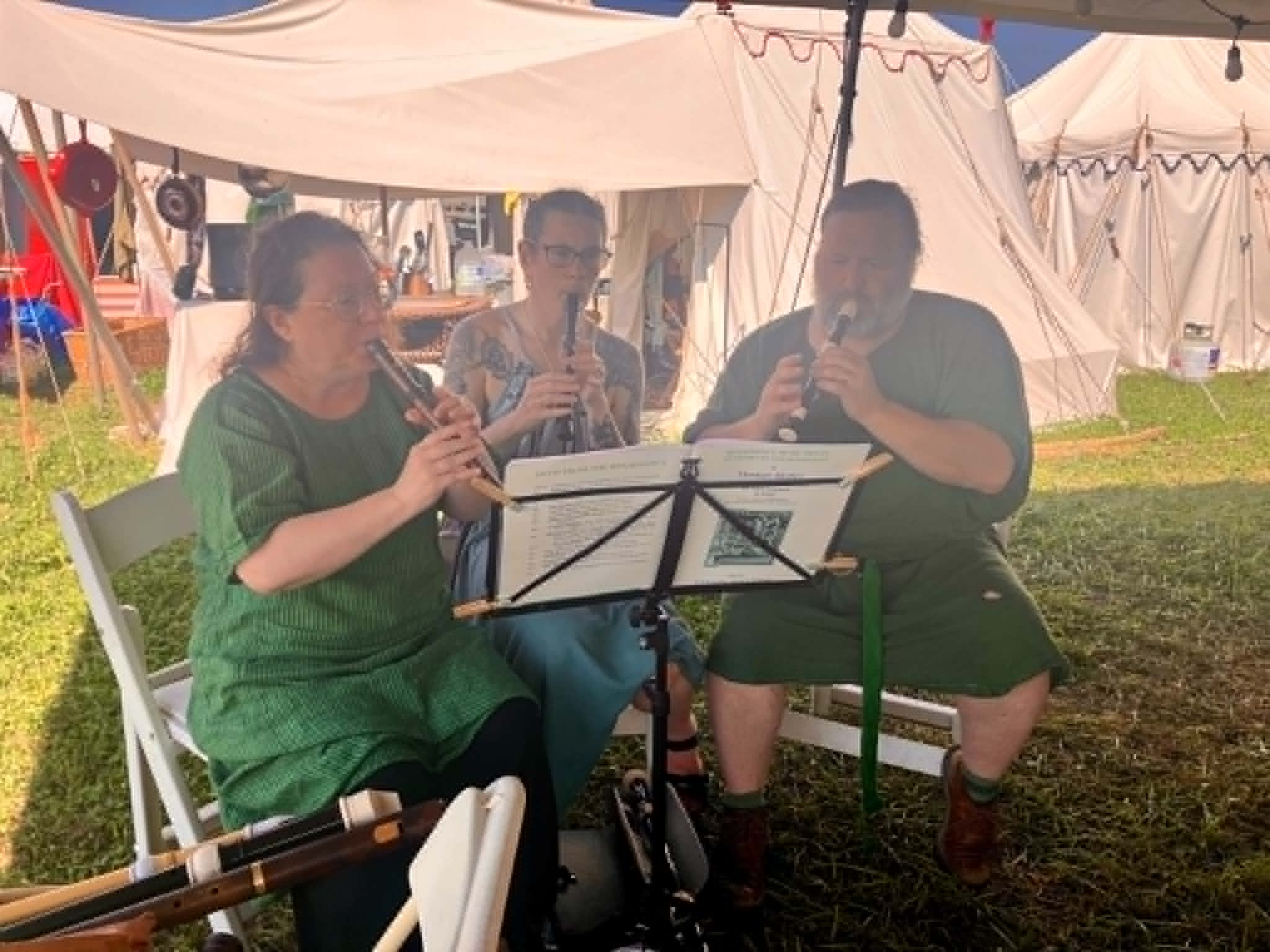
From there, I headed to my dear friend Emeline’s vigil where I sang for her and played recorder as background music. It filled my cup to be able to give the gift that she requested.
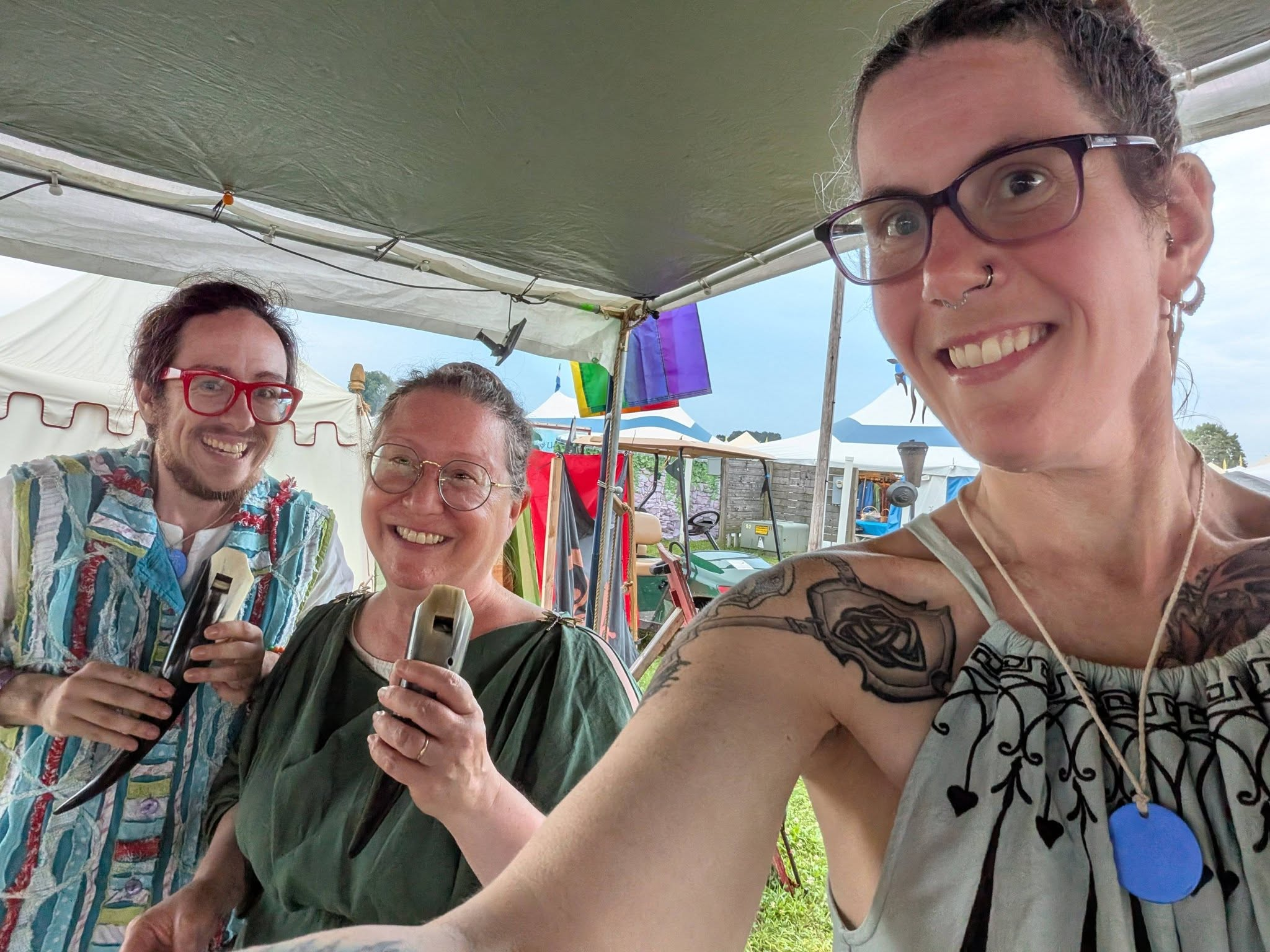
Later that evening, Sabine was hosting a more official jam session but I think the rain scared everyone away. Bird the Bard, who is also Sabine’s student, showed up and we got to rock out on gemshorns! This was only like my second time seriously getting to pick one up and play and it was such a joy. It is close to recorder on the fingerings that I was able to hold my own and jam out to cantigas. Another several hours of playing. My soul was just so full.
Thursday was my last day of fencing. I decided ahead of time that I was going to be fencing in the Cadet tournament. Where I am not officially a cadet, I still met the parameters of the tournament. I just needed someone to sponsor me. Cedric had offered to do so on one condition. I was to write the letter myself and it had to be an “interesting” letter, so I had a task set before me. Here is what I concocted Cadet Sponsor Letter.
I didn’t know there was anything special about the letters until I was pulled aside and told that my letter won the favorite letter of two gentles running the tournament. This meant I got to pick my first fight….. of 94 fencers. I went with whoever seemed eager because honestly, I knew maybe 10 of the 94 and my goal was to fight as many new folks as possible. I didn’t win the tournament, but winning the “Bardic” portion of the fencing tournament, I will take as a win. I left shortly after I lost my last life because the humidity was taking it’s toll on me but I’m still proud with how I did.
I will upload my pennsic concert when I get around to it, which should be shortly, but I wanted to get this up now before I lose my thoughts.
Scroll for the Deed of Arms 2026
Stalwart is the champion whose name is echoed through the lands. They bear a soul with courage and honor that carries the weight of a thousand noble vows. With a sword at their side and valor within their heart, they traveled forth. This was not for treasure nor praise, but to uphold the sacred path of chivalry. They defend the helpless, keep faith with friend and foe alike, and stand firm where shadows gather upon the land.
Amid the clamor of battle and the turning of fortune’s wheel, these heros show a steadfast spirit, for true honor was found not only in the strength of the arm but in the kindness of the soul. The tales of their deeds traveled from humble hearths to castle halls, spoken and sung by minstrels who praised their courage, wisdom, and grace. Thus was their legacy woven into the memory of all. Thus, where chivalry is found we bestow this shield to commemorate their greatness for all to remember and tell their tale. Given this 10th day of July AS 61 at GNEW XXXVIII

Calligraphy by Kathryn Cranford Illumination by Corey LeMoine
Sometimes I sew too…
Dual Court Baronage
Award to Genevra d’Angoulême
Let it be known that on June 20, 2026, AS 61, at the Iron Bog Investiture, we, King Culann and Queen Honig, do hereby recognize Genevra d’Angoulême for her unwavering hard work, deep love, steadfast protection of her barony, filling of bellies and avid wrangler of hedgehogs. For these reasons, we honor her service by making her a Baroness of our court.
Award to Andre l’Epervier
Let it be known that on June 20, 2026, AS 61, at the Iron Bog Investiture, we, King Culann and Queen Honig, do hereby recognize Andre l’Epervier for his tireless hard work, enduring love, and steadfast protection of his Barony. As master of fine points, needle and blade, he has helped safeguard its well-being, and for this we honor him with gratitude by making him a Baron of our court.
Just a little ditty
This weekend I attended Otter’s Welcome, which, if you have never been is a great event for new comers and recruitment into the SCA. As a chatelaine I do my best to support whatever demo’s are within a reasonable drive of me that looks like it could use more help. Early on site, I was approached and asked if I would be willing to sing for the I Sebastiani commedia troupe.
They asked me to sing something upbeat and happy. This, as many of you know, is not quite my repertoire but I think I had something up my sleeve. After digging through my book of songs (Bard Book) I came across a few, including 1 in Italian. Though, knowing what I knew about the show (which was the title), I chose to sing “I Care not for these ladies”. It wasn’t fresh in my brain because the last time I sang it was in October so I opted to use my book as part of my performance. I also want to state that I think it should be normalized that a performer can use their book and effectively as long as they are not buried in it.
Here is a link to the performance. You should watch the whole performance, not just me.
Maunche- Anezka
Based off of The Tale of the Twelve Months
First comes the Herald, keeper of truth,
Who knoweth the weight of every name.
They telleth of Novák, the newcomer,
And Černý, the dark, both steadfast in fame.
They lifteth the roll where ancestry lies,
And proclaimeth aloud before noble eyes.
Next comes the Scribe, with ink and light,
Whose hand endureth when voices fade.
By quill are the lineages gathered,
And every stroke a memory made.
Their letters march like ranks of men,
Binding the past to the present again.
Then comes the Fencer, measured of step,
Steel in hand and honor in heart.
They teacheth by blade as by virtue,
That discipline standeth with art.
Their parries are prayers, their thrusts are laws,
Each strike recalling their kingdom’s cause.
Last comes the Fox, both clever and sly,
They keepeth the lore with cunning and song.
They guardeth the craft for future days,
That wisdom be handed along.
Not trickster alone, but watchful and keen,
They walk between what hath been and what’s seen.
Be it proclaimed before all folk and friends:
Anezka is taken into the Order of the Maunche,
By the hands of Ryoukojin and Indrakshi,
To be held in the fellowship steadfast and staunch.
To have and to hold this honor in faith,
As long as the sun shall rise on the earth.
Thus Name, and Letter, and Deed, and Guile
Are bound in one enduring style;
And so is their virtue woven in song,
Their glory assured, unbroken and strong.
Mauche- Eamon Gray
We, King Donovan and Meghanta, Padshah Begum of these Eastern Lands, have not only heard the resounding praise sung far and wide of the wondrous scribal works of Eamon Grey, but have beheld them with Our own eyes—and in so doing, We are left in awe.
With a steady and unshakable hand, he breathes life into radiant illumination, laying gold and pigment with such brilliance and reverence that each page seems kissed by the sun itself, as though dawn had been captured and bound within the borders of his art. No flourish is too small, no detail too subtle to escape his keen and watchful attention, for his craft is guided by patience, devotion, and a mastery both rare and resplendent.
Yet it is in his calligraphy that he shines brightest of all: choosing the proper hand with wisdom and grace, he shapes every letter as though it were a jewel set into a crown—each stroke deliberate, elegant, and true. Thus are the important messages entrusted to him not merely written, but exalted: made clear as crystal, noble as proclamation, and worthy to endure in memory long after the ink has dried and the years have turned to legend.
Thus, do We induct him as a Companion of Our Order of the Maunche. Done this day at Kingdom Bardic Champions, in the Barony of Stonemarche, A.S. LX.
Boast for Agnes Marie de Calais
Hear now of the Honorable Agnes Marie de Calais, whose name is spoken as a spell and whose deeds ring louder than brazen trumpets. Hailing from the shire of quintavia but birthed in the Barony of the Bridge. She is a member of the house von Drackenlaue and House Iron Tide. She bore the letters to Aganese, not written but delivered, drawn forth like living things from the womb of language itself, each character crying out to be known. She licked amber to polish it, warming ancient resin with breath and devotion until time itself shone back at her, humbled and gleaming.
She has commanded the air with immersive spoken word, weaving voice, body, and silence into a living rite that seized the soul and would not let go. She plunged fearlessly into the depths of a Medici cruet, unearthing truth from glass and gold, history trembling under her gaze. Member of the Order of the maunche, silver wheel and troubadour. Holder of a golden Lyre and once Bardic champion to the east.
Above all, she is a teacher of teachers, sharpening minds, igniting brilliance, and leaving wisdom in her wake like fire across dry fields. Where Agnes walks, knowledge rises.
Choka for Sugawara’s Elevation- Populace Speech
Steady as spring rains,
her thoughts bloom like plum blossoms,
petals of insight
fall gently through silent hours—
each one a treasure,
a thread in her woven mind.
Through ancient silence,
she listens with patient care,
reading old echoes
in shifting masks and meaning,
honoring the souls
that shaped self and time and name.
Beneath worn pages,
her hand lifts forgotten breath,
each line a lantern
guiding through the dusky past—
Japanese persona,
once blurred, she brings to sharp light.
She does not falter,
though the work is slow and deep.
While others grow tired,
Sugawara still labors,
eyes bright with purpose,
fingers stained with ink and truth.
Her days are quiet,
but the silence sings of her—
a mind in motion,
building bridges of meaning
between what has been
and what still waits to be known.
Kindness is her blade,
cutting through harshness and pride,
humble yet noble,
she gives all she has to give,
never asking praise,
only seeking understanding.
Through her diligence,
our stories grow rich and whole.
Through her gentle strength,
the world knows a softer truth—
that care is power,
and listening is wisdom.
Sugawara’s name
like soft rain on temple stones—
lasting, quiet, true of heart

