This weekend I attended Otter’s Welcome, which, if you have never been is a great event for new comers and recruitment into the SCA. As a chatelaine I do my best to support whatever demo’s are within a reasonable drive of me that looks like it could use more help. Early on site, I was approached and asked if I would be willing to sing for the I Sebastiani commedia troupe.
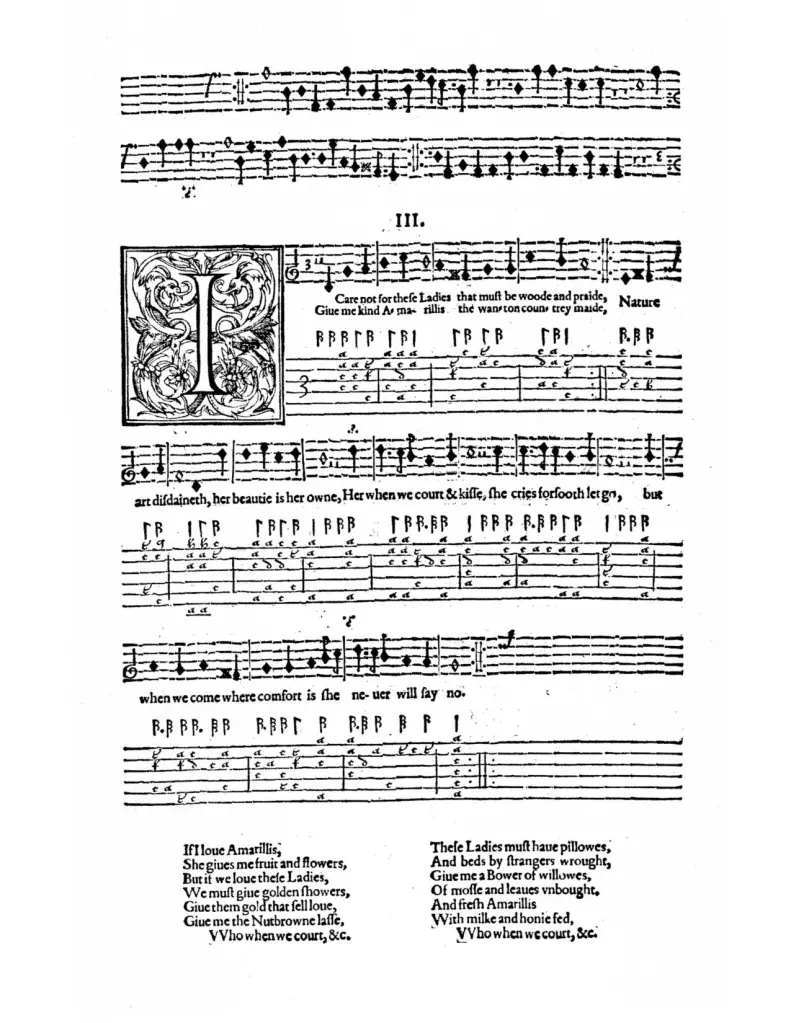
They asked me to sing something upbeat and happy. This, as many of you know, is not quite my repertoire but I think I had something up my sleeve. After digging through my book of songs (Bard Book) I came across a few, including 1 in Italian. Though, knowing what I knew about the show (which was the title), I chose to sing “I Care not for these ladies”. It wasn’t fresh in my brain because the last time I sang it was in October so I opted to use my book as part of my performance. I also want to state that I think it should be normalized that a performer can use their book and effectively as long as they are not buried in it.
Here is a link to the performance. You should watch the whole performance, not just me.
First comes the Herald, keeper of truth, Who knoweth the weight of every name. They telleth of Novák, the newcomer, And Černý, the dark, both steadfast in fame. They lifteth the roll where ancestry lies, And proclaimeth aloud before noble eyes.
Next comes the Scribe, with ink and light, Whose hand endureth when voices fade. By quill are the lineages gathered, And every stroke a memory made. Their letters march like ranks of men, Binding the past to the present again.
Then comes the Fencer, measured of step, Steel in hand and honor in heart. They teacheth by blade as by virtue, That discipline standeth with art. Their parries are prayers, their thrusts are laws, Each strike recalling their kingdom’s cause.
Last comes the Fox, both clever and sly, They keepeth the lore with cunning and song. They guardeth the craft for future days, That wisdom be handed along. Not trickster alone, but watchful and keen, They walk between what hath been and what’s seen.
Be it proclaimed before all folk and friends: Anezka is taken into the Order of the Maunche, By the hands of Ryoukojin and Indrakshi, To be held in the fellowship steadfast and staunch. To have and to hold this honor in faith, As long as the sun shall rise on the earth.
Thus Name, and Letter, and Deed, and Guile Are bound in one enduring style; And so is their virtue woven in song, Their glory assured, unbroken and strong.
We, King Donovan and Meghanta, Padshah Begum of these Eastern Lands, have not only heard the resounding praise sung far and wide of the wondrous scribal works of Eamon Grey, but have beheld them with Our own eyes—and in so doing, We are left in awe.
With a steady and unshakable hand, he breathes life into radiant illumination, laying gold and pigment with such brilliance and reverence that each page seems kissed by the sun itself, as though dawn had been captured and bound within the borders of his art. No flourish is too small, no detail too subtle to escape his keen and watchful attention, for his craft is guided by patience, devotion, and a mastery both rare and resplendent.
Yet it is in his calligraphy that he shines brightest of all: choosing the proper hand with wisdom and grace, he shapes every letter as though it were a jewel set into a crown—each stroke deliberate, elegant, and true. Thus are the important messages entrusted to him not merely written, but exalted: made clear as crystal, noble as proclamation, and worthy to endure in memory long after the ink has dried and the years have turned to legend.
Thus, do We induct him as a Companion of Our Order of the Maunche. Done this day at Kingdom Bardic Champions, in the Barony of Stonemarche, A.S. LX.
Title:I Care Not for These Ladies Composer: Thomas Campion (1567–1620) Date: Early 17th Century (published 1601) Type of Work: English lute song (ayre) Source:A Booke of Ayres (1601)
I Care Not for These Ladies is a lute song composed by Thomas Campion, a prolific English composer, poet, and physician active during the late Elizabethan and early Jacobean periods. The piece appears in A Booke of Ayres, published in 1601—a collection co-authored with lutenist Philip Rosseter, representing the English art song tradition known as the ayre. An ayre (also spelled air, ayir, or ayre) is a type of solo song with instrumental accompaniment that was popular in England during the late Renaissance and early Baroque periods—roughly from the late 1500s to the early 1600s. (Boyd, Elizabethan Music and the Ayre, p. 42) Ayres typically had a clear melody, were strophic, expressive but not overly complex and finally were often were dealing with themes of love, nature, melancholy, or pastoral life. These songs were typically written for solo voice and lute accompaniment and were enjoyed in both courtly and domestic settings. (Greer, “Campion, Thomas,” Grove Music Online).
Campion’s work stood out for its graceful lyrical economy and integration of poetry and music. His ayres often featured simple, clear textures and a refined sense of word-setting.
“I Care Not for These Ladies” exemplifies Campion’s lyrical wit and poetic satire. It rejects the superficial charms of courtly women in favor of a more rustic and sensual ideal, in a tone both humorous and sharply critical of affectation. This theme of rejecting artificiality was common in Renaissance poetry, especially in contrast to the elaborate conventions of Petrarchan love. The poem is written in a light, playful tone, contrasting the courtly lady—requiring wealth, formal wooing, and luxury—with the “wanton country maid,” who offers affection without financial demands. Campion’s choice of plain diction reflects his poetic philosophy as stated in his treatise Observations in the Art of English Poesie (1602), where he argued against excessive ornamentation in favor of “a certain plainnesse and flowing measure.”
I care not for these ladies, That must be wooed and prayed: Give me kind Amaryllis, The wanton country maid. Nature art disdaineth, Her beauty is her own. Her when we court and kiss, She cries, “Forsooth, let go!” But when we come where comfort is, She never will say no.
If I love Amaryllis, She gives me fruit and flowers: But if we love these ladies, We must give golden showers. Give them gold, that sell love, Give me the nut-brown lass, Who, when we court and kiss, She cries, “Forsooth, let go!” But when we come where comfort is, She never will say no.
These ladies must have pillows, And beds by strangers wrought; Give me a bower of willows, Of moss and leaves unbought, And fresh Amaryllis, With milk and honey fed; Who, when we court and kiss, She cries, “Forsooth, let go!” But when we come where comfort is, She never will say no.
This poem is a satirical rejection of courtly love conventions, favoring a more natural, earthy relationship over the artificial rituals of noble romance. The speaker dismisses the elaborate performances of upper-class women—those who “must be wooed and prayed”—in favor of a more direct and sensual bond with a rural maiden named Amaryllis.
Courtly Women represent artificiality, chastity performed as power, and romantic delay. Where as Amaryllis represents a pastoral, mythological name common in Renaissance poetry, symbolizing a more natural and sexual freedom.
“Nature art disdaineth” implies that true beauty comes from nature, not cosmetic or social artifice.
This stanza opens with a rejection of courtly ladies, who require elaborate rituals of wooing and begging. The speaker prefers Amaryllis, a common pastoral name symbolizing rustic, natural love. “Wanton country maid” conveys sexual openness but also innocence in contrast to the jaded court. The closing lines play with mock modesty: she resists at first (“let go!”) but ultimately consents (“never will say no”), a humorous portrayal of flirtation and desire common in Renaissance literature.
The “nut-brown lass” further invokes natural beauty—sun-kissed, not pale and powdered. The repetition of the refrain serves to reinforce the speaker’s preference for sincerity and physical closeness over ornament and pretense.
Court ladies require fancy “pillows” and beds “by strangers wrought” (i.e., expensive, manufactured luxuries). In contrast, the speaker desires a bower of willows—a simple natural shelter symbolizing freedom, intimacy, and peace.
“Milk and honey” alludes to pastoral abundance, drawing on biblical imagery (e.g., the Promised Land) and classical ideals of Arcadian pleasure. Again, the stanza ends with the comic mock-virginal protest followed by consent, emphasizing both Amaryllis’s modesty and her availability.
Amaryllis gives “fruit and flowers”—symbols of fertility, nature, and affection freely given. In contrast, the ladies of the court expect “golden showers”—interpreted in the 17th-century context as gifts of wealth, referencing materialism and even transactional love.The phrase “Give them gold, that sell love” is sharp: the speaker equates court ladies with prostitutes, or at least as women whose affection must be purchased.
Note: This flirtatious treatment of consent should be approached critically by modern performers—acknowledging the cultural context while avoiding romanticization of ambiguous consent.
Campion’s song reflects the Elizabethan and early Stuart shift from the Petrarchan model (idealizing women and love from afar) to a more ironic, earthly view of love. The use of a pastoral figure (Amaryllis) is typical of the time: country life was idealized as simpler, more honest, and more passionate. The poem is in dialogue with other poets of the age, like Christopher Marlowe (“Come live with me and be my love”) and Sir Walter Raleigh, who similarly contrast court and country values.
Sources and References:
Bullen, A. H., editor. Lyrics from the Song-Books of the Elizabethan Age. John C. Nimmo, 1887.
Campion, Thomas and Philip Rosseter. A Booke of Ayres, 1601. (Facsimiles and editions available through Early English Books Online and modern publishers)
Fellowes, Edmund H. English Lute Songs (Stainer & Bell)
Fortune, Nigel. “Campion, Thomas.” Grove Music Online. Oxford University Press. http://www.oxfordmusiconline.com (Access may require institutional login.)
Greer, David. Thomas Campion: Poems, Songs, and Masques (Oxford University Press)
Thomas, Raymond C. “The Function of Song in the Poetry of Thomas Campion.” Studies in Philology, vol. 55, no. 4, 1958, pp. 673–688. JSTOR, http://www.jstor.org/stable/4172933.
Sabol, Andrew, editor. The Songs and Masques of Thomas Campion. Harvard University Press, 1973.
Spring, Matthew. The Lute in Britain: A History of the Instrument and Its Music. Oxford University Press, 2001.
Tillyard, E. M. W. The Elizabethan World Picture. Chatto and Windus, 1943.
Thomas, Raymond C. “The Function of Song in the Poetry of Thomas Campion.” Studies in Philology, vol. 55, no. 4, 1958, pp. 673–688. JSTOR, http://www.jstor.org/stable/4172933.
Waller, Gary. English Poetry of the Sixteenth Century. Longman, 1986.
Woudhuysen, H. R., editor. The Penguin Book of Renaissance Verse 1509–1659. Penguin Books, 1992.
I was asked several years ago to compose and athem for Stonemarche. I have had very little faith in my own compositions. The kingdom is filled with very many talented composers and who am I to try to be amongst them? It was brought up again that we needed an anthem and I finally got the gumption to write one. It’s not perfect and it’s a little quirky but so is our Barony.
Below is the recording of it’s first performance and the lyrics are below.
In the snow capped mountains From far away lands Dwelled the folks in 3 towers Who wear white and green bands
We fence and loose arrows We sing and we dance See the gifts that we offer Our love’s not a chance
We’ve a motto in Stonemarche, There’s no famine we said, In Stonemarche, Stonemarche Our home, our hearth, our stead We’ve a motto in Stonemarche, There’s no famine we said, In Stonemarche, Stonemarche Our home, our hearth, our stead
Rolling lands rich with sheep Cross the grass covered hills A gift from lochleven We tend to their wills
Cross the grass spanning lands And as they wander and roam Our children do gather And bring them all home
We’ve a motto in Stonemarche, There’s no famine we said, In Stonemarche, Stonemarche Our home, our hearth, our stead We’ve a motto in Stonemarche, There’s no famine we said, In Stonemarche, Stonemarche Our home, our hearth, our stead
If you come from the outside If you dwell in our tillage All around us are welcome Inside our family’s village
Paint us up a bright chorus Join our Bards in their song We fight and we dance No activity’s wrong
We’ve a motto in Stonemarche, There’s no famine we said, In Stonemarche, Stonemarche Our home, our hearth, our stead We’ve a motto in Stonemarche, There’s no famine we said, In Stonemarche, Stonemarche Our home, our hearth, our stead
We’ve a motto in Stonemarche, There’s no famine we said, In Stonemarche, Stonemarche Our home, our hearth, our stead We’ve a motto in Stonemarche, There’s no famine we said, In Stonemarche, Stonemarche Our home, our hearth, our stead
Not a ton to report. These pieces aren’t super new to me outside of my own composition and the new lyrics to Miri. The day felt good and I’m not ashamed of my performances. They weren’t perfect but they were solid.
I wrote this… I wrote all of this. Putting out songs of my own are terrifying. It took me until now to finally feel comfortable enough to publish this. This isn’t the best recording but that’s ok. Folks came in late, a spider was taken off me while performing BUT! people sang along. That is why I felt like posting this. I hope this song becomes an anthem for the Bards. This is about who sings for us when we are gone. Think a-la Hamilton, “Who Lives, Who Dies, Who Tells Their Stories”. Be brave. Sing your songs unashamedly.
Video taken by Jasmine Rochelle Goodspeed
I dreamt of a day when you sang a song The song was spun for me Instead of painting a warriors skills Bardic tales were their decree
I hoped for the day when lauds and praise For those who most enchant Not the stories and words of those who berserked Spoken out for those who can’t
Who will sing my song when I’m gone? Who will tell my story? Who’ll remember the days And sing of the praise Of the minstrel’s memory
If you would walk the streets at night Or at a meal or ale Hark! To those who weave the myths Sing for them a jaunt wassail
Know you the tales of great Arthur You have heard of Lancelot Epic deeds rhymed in memory fair But the bringers oft forgot
Chorus x2
The sun will rise and the moon will fall As time will wane and pass To the memory of those before We all should raise a glass
To the bringers of the melody When their bodies live no more A chorus sung to bring their name And conjure spirits to restore
I have done several boasts this year. All of them have been hand crafted by me, but this time, I had been asked to do a different task. This time, my friend, Lisabetta, did not wish to be lauded as she entered court. She simply wanted to be sang in.
I was contacted about a week before the event via email by her grace, Marieke asking me if I would be willing to perform this task (No pun intended). She said that it wasn’t a specific piece, but Lisabetta would like it to be in Italian.
I had a couple pieces in my back pocket, super memorized, but nothing that really captured Lisabetta and what -she- would have wanted. So, I did a bit of thinking. Lisabetta is female artisan who has worked her entire life to be the incredible, warm and well versed in her art. Although her persona is not 16th century (or atleast, I don’t think) I feel like she would have loved the music of the 16th century and Isabelle D’Este, who was the reason why women in the 16th century were able to have a viable career. She loved madrigals and so I pulled out my book of Madrigals and picked out “O Occhi Manza Mia”.
I had been heralding all day in the cold so seeing if I still had a voice was a thing. Here is the translation.
O occhi, manza mia, cigli dorati, o faccia d’una luna stralucente, Tienemi mente, gioia mia bella, Guardam’un poc’a me, fami contiento. O bocca come zuccaro impanato, o canna che specchiare fai la gente, Tienimi… O cuore, manza mia, perfido cuore. tu sei la gioia mia, lo mio amore! Tienimi…
Oh my beloved’s eyes, set in gold-blond lashes, oh face more luminous than the moon, Keep me in mind, my lovely treasure,Look upon me for a little while, and keep me happy. Oh mouth like sugarloaf, oh throat, that brings crowds in to suckle, Keep me… Oh heart, my beloved, most perfidious of hearts, you are my treasure, you are my love! Keep me…
Oh yeah… I also read the scroll.. because I could.
Blank scrolls are hard. Do with this what you will.
In the shadowed embrace of this night of specters and enchantments, we, the honored Baron and Baroness of Iron Bog, do joyously recognize the luminous brilliance of [Recipient’s Name]. With artistry and grace that transcend the ordinary, your creation, [specific item or artwork], has enchanted our senses and captured the very essence of our eerie revelry.
Through the whispered tales woven into your work, your skills’ splendor shines like a beacon in the twilight. Your dedication to the craft and your ability to conjure beauty from the mists of time have earned you this distinction.
May your creative spirit continue to soar on the wings of inspiration.
Given this [day] at Ghosts, Ghouls and Goblins, AS 59 by their Excellencies Andre l’Epervier and Genevra d’Angouleme.
Úlfarr is another human who has been in my life for several years. He works hard and is an incredibly skilled story teller. When you see him in full blown Bard, it’s captivating. I’ve been lucky to also serve as a mentor to him for running events but also to see him grown in his own with service to the College of Performers as well as service to his Barony. When the scribe asked me to wordsmith this scroll, I was overjoyed. I hope he feels the same way.
Master of service and Skald we emplore, In the heart of Settmore Swamp’s embrace, Thy name resounds, esteemed evermore.
And never in adversity do we face
From northern climes and storied past, Thy voice like a beacon doth shine, Guiding the realm with tales steadfast, And lore that through ages entwines.
In halls where the minstrels’ voices blend, Thy contributions ring clear and bright, College of Performers, a chatelaine and friend, Thou art a beacon in the night.
With tireless hand and spirit bold, Thou hast nurtured as Seneschal through Settmore’s song, Fostering the craft with wisdom untold, Where bards and poets together throng.
Through stewarding gatherings, great and small, Thy service doth never wane or cease, For Settmore and the realm’s great hall, Thy deeds bring harmony and peace.
To each event and joyful fest, Thou bringest both cheer and grace, Uplifting all, thy gift expressed, In every heartfelt, joyous space.
Thus, we honor thee with verse, For thy service, so noble and grand, In Settmore and the East you traverse, Thy legacy in tale shall stand.