GNEW and Pennsic- The Great Morley Boogaloo

It’s been since 2009 since I have headlined a concert or really felt like myself as a performer. Over the years, I have been backing myself down to do more ensemble playing. I continued to do solo performances but nothing really too large. I did also step down for the second time as Consorts Bard this past year and that opportunity gave me multiple solo experiences and opportunities. However, at the suggestion of Richard Heyworth, it was time to get my big girl britches back on and really get up and do what makes me happy and feeling competent as a performer.

With some rabbit holes dove into, we found this book of Canzonettes ( a short, lively, and cheerful song. The word comes from Italian as a “little song,” derived from canzone) for 2 voices. This was composed by Thomas Morley. Where this was not quite solo work, it still gave me the opportunity to perform each piece and also play with friends. I decided I was going to learn the -entire- book. This was 12 pieces of vocal music which ran about 30 minutes solid of music with no breaks taken. That… is a lot. I, again, have not done that much solid singing since 2009 when I gave my senior recital at school for my undergraduate degree. The largest challenge I was facing was not the difficulty of the music, but the physical changes to my instrument that started in 2022. Let me talk a little more about this.

The human voice is not a solitary instrument. It is effected by it’s housing. Weight loss can change the shape and amount of soft tissue surrounding the throat, mouth, and vocal tract. This can alter how sound resonates. Your voice isn’t produced only by the vocal cords. It is produced by the throat, mouth, tongue, and nasal passages act as a resonating chamber. Changes in surrounding tissue can subtly change the sound. Significant changes in body composition can potentially affect the tissues supporting the vocal folds, which may influence pitch or vocal quality. Weight loss can affect breathing mechanics and respiratory support, which can make the voice sound different or change how easily you project. If the weight loss is substantial or occurs rapidly, changes in nutrition or hormones can sometimes affect the vocal folds and muscle strength.
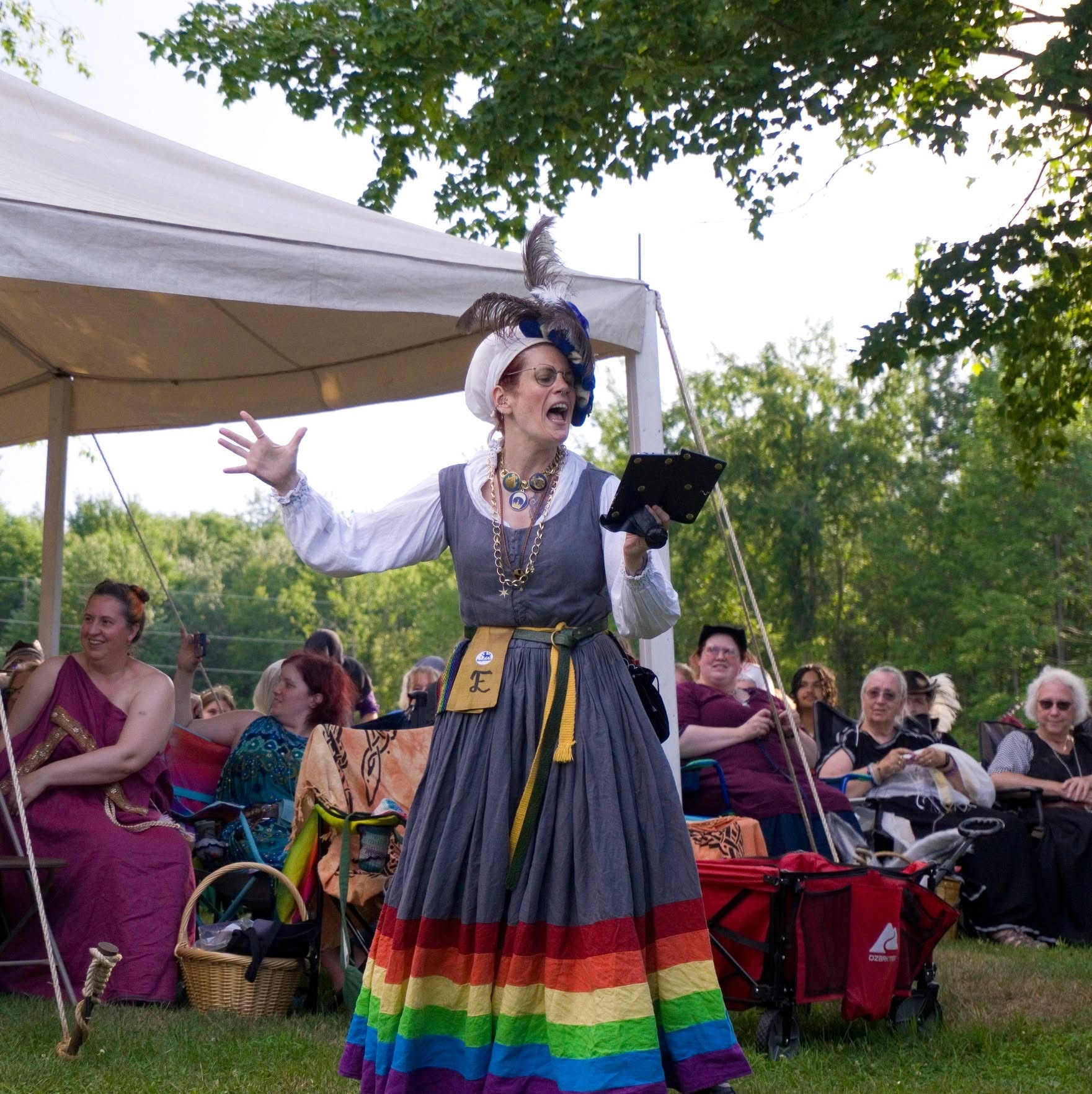
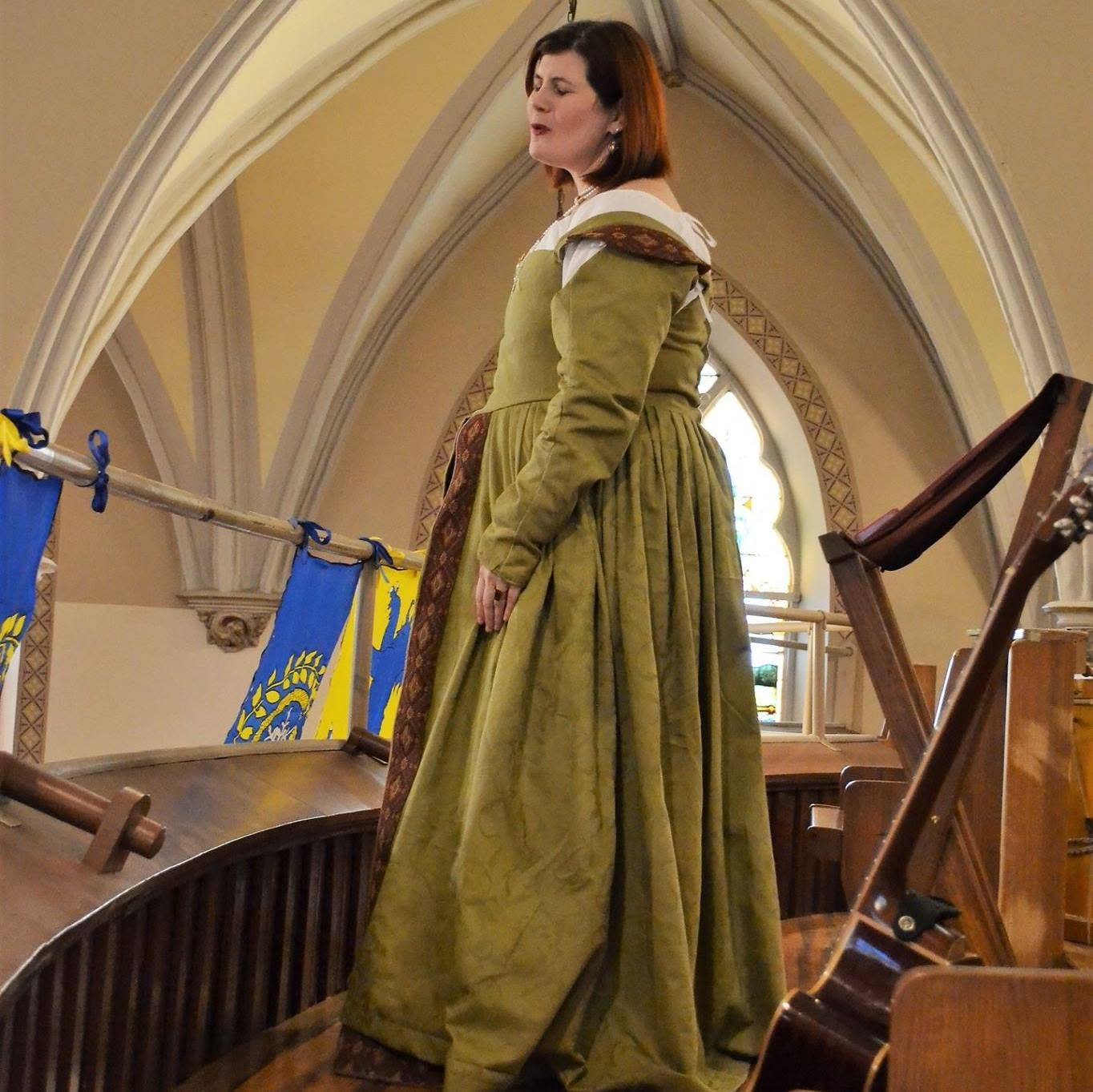
This then becomes a very sensitive subject for me because my voice has been a lot of my identity. Neither here nor there, I moved forward with this project. I reached out to a few friends of mine to see if they would be interested in singing/playing some of these pieces and was greeted with excited responses of yes.

As I pursued this project, I also decided to see if there was something more to the canzonettes. Sure as the sun shines there was some good gossip behind the canzonettes. If you, gentle reader, are interested, click this link below:

Mor(ley) or Less a Canzonette

Preparing for the concert was a bit more of a trial. I could control my own singing but how was I to know if my volunteers would be ready and in action. One performer was in North Eastern MA, one in South Western NH, another in Western MA and one in Michigan.

What I had planned was not what in the end happened. We got to GNEW and one of my performers, the night before the concert, advised they could no longer be there. So, that left me with a 9am emergency rehearsal with one vocalist and one instrumentalist. The other vocalist was only slotted for Pennsic. No one seemed to notice that this was a change and I am quite thankful for that. This was a dry run for Pennsic.

Now, we get to Pennsic. Friday afternoon, the sun. HOT. We managed to get set up and I think I am smart enough to not schedule any rehearsal time. Friday was just about getting into headspace for a weekend of Arts and Sciences into the concert. However, this is not before serving as our rapier champion.
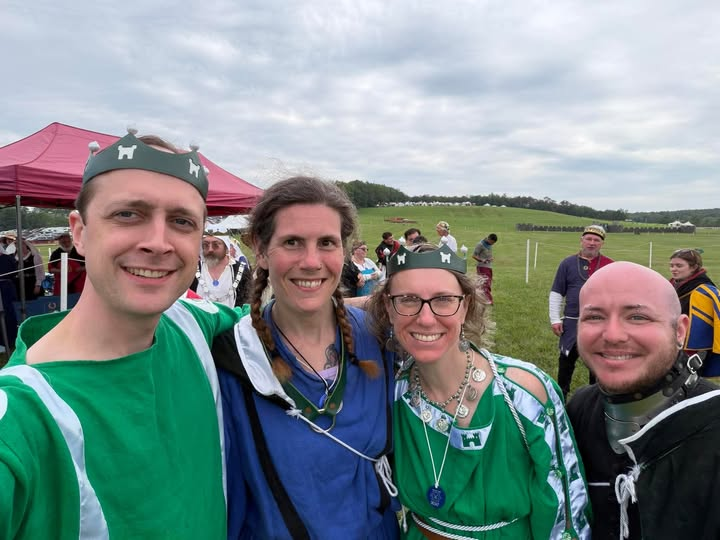
I think it’s really important to be versed in something else outside of your art so that you have something for your head to retreat to when the brain weasels are bad. For me, this is fencing. This was the start to my Saturday. Above is an image of our amazing Excellencies and my most excellent partner in crime, Corso, Baroness’ champion of fence after both of us won our exhibition bout. Neither of us won the tournament, but I had received feedback from many of the landed that I was a fun looking fight, chivalrous and though appearing somewhat demure they could see the mischief in me.
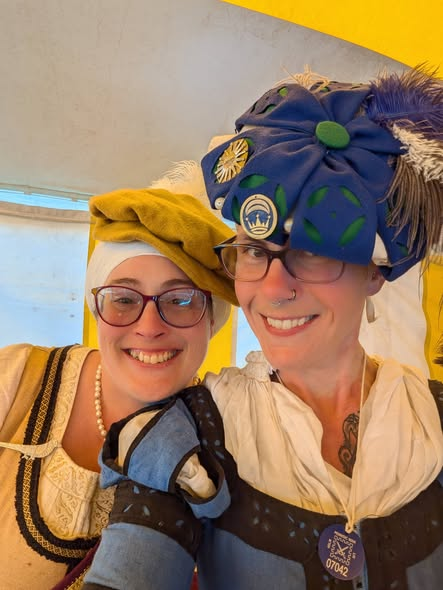
From there went back to rehearsals. I met with my vocalist from Western MA, Cecelie. An hour put in plus the occasional chatting and I was feeling better about our performance.

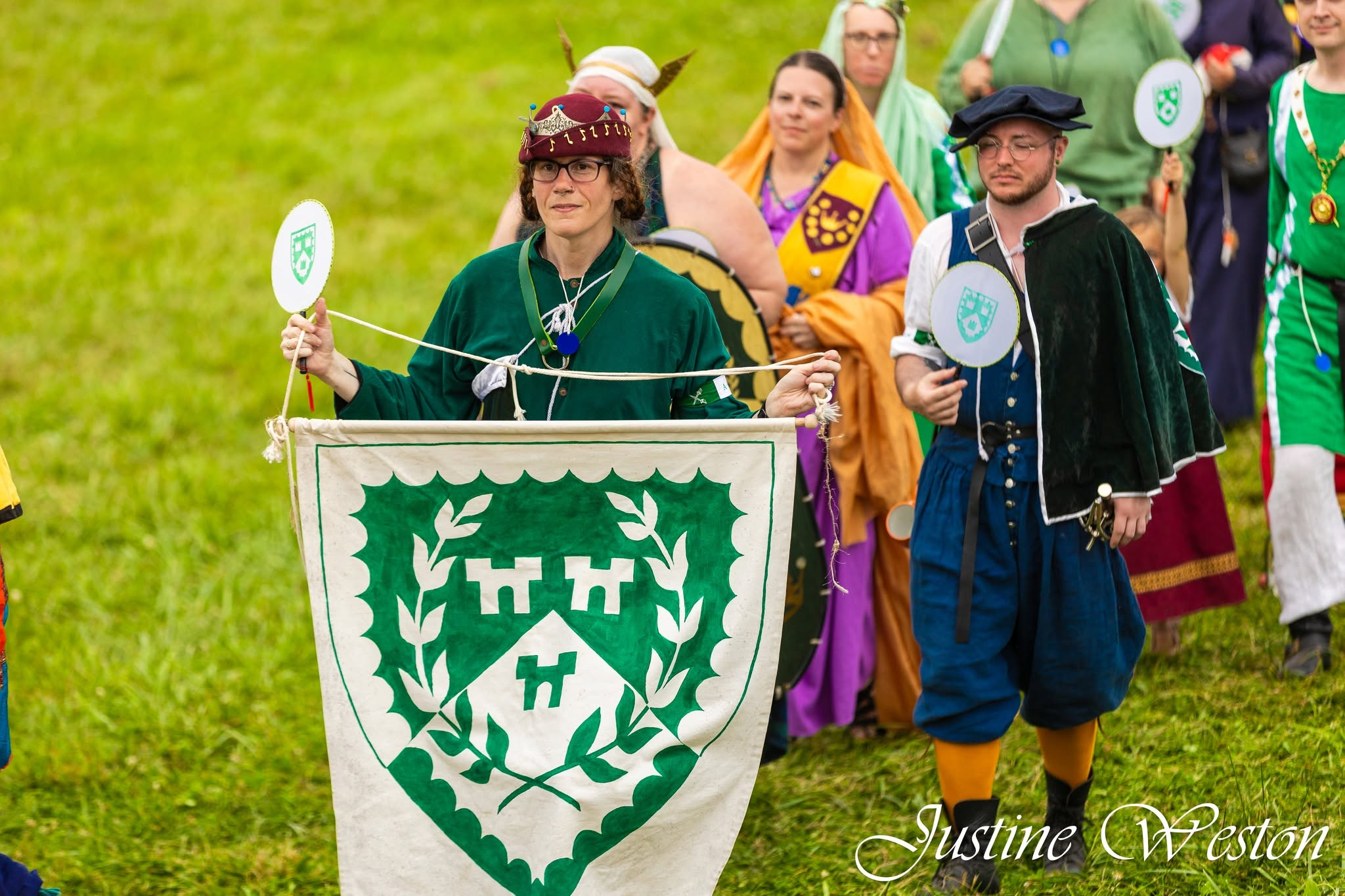
Opening Ceremonies are always so fun and full of pomp.
That evening I made my pilgrimage to the B blocks to perform at Caoilfhionn’s Bardic Circle. I had been performing at this the last several years. I never will miss this Bardic. Her grace has made this a safe and welcoming performance space. I feel safe bringing everything from period pieces to trad to things I have composed myself. Each time, something new. My little cheater night to really sing and make sure I am keeping my instrument healthy and safe. It’s rough with all the talking and dust that happens at Pennsic.
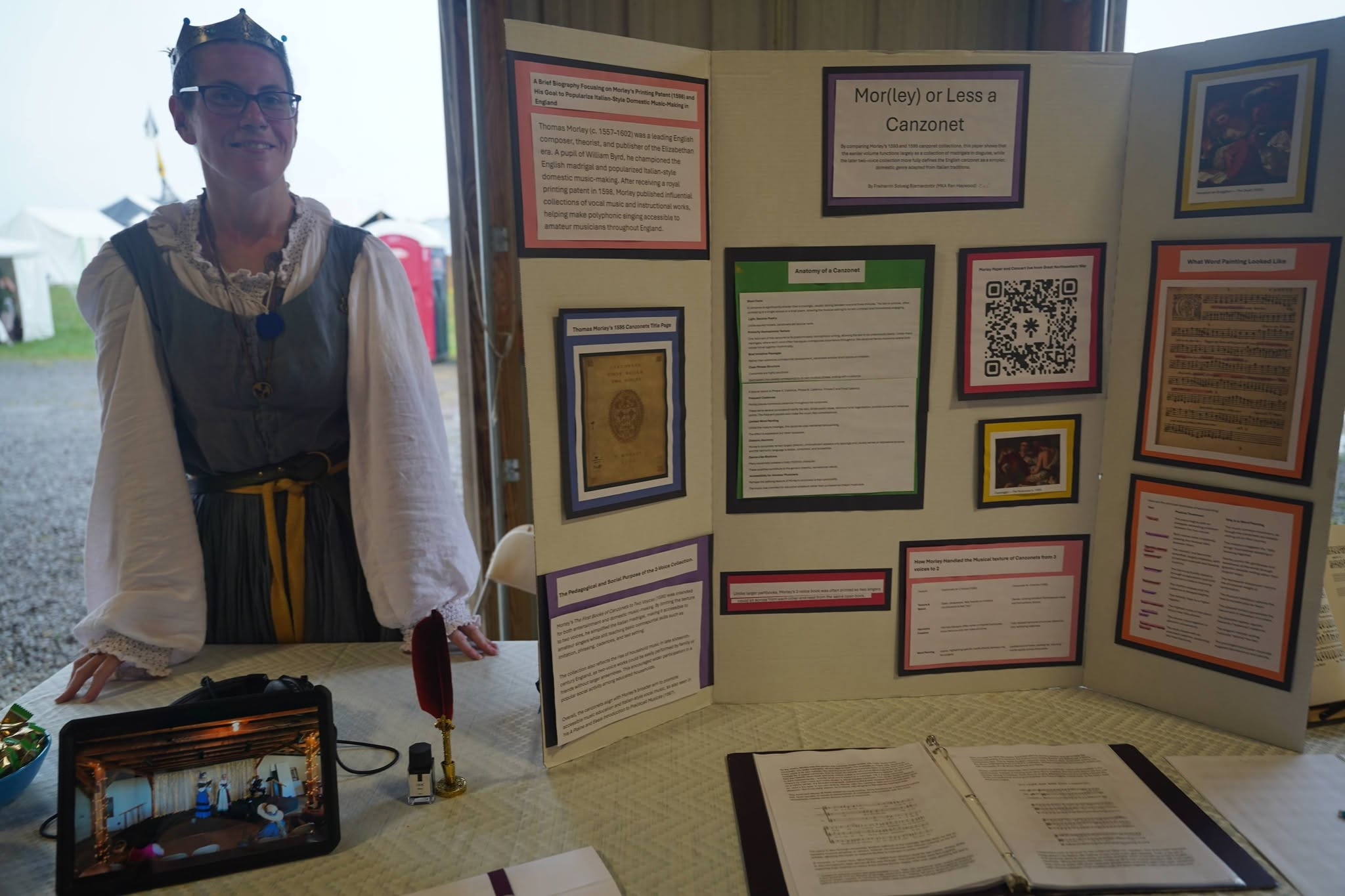
Sunday was now once again shifted for focus. I decided to display my concert

(Videos of Morley Concert from GNEW)

from GNEW and the paper I wrote (posted above). I typically don’t display my work. I have been very disheartened by people who simply don’t stop by because I don’t have something pretty to touch or taste. I decided this was going to be different. I sat with my display mostly from 12-5, however during that time I was also able to provide a consultation to a newer scadian. Their work was also music related and I lit up when I was able to see what they were working on. I am ashamed to say I didn’t get their contact info outside of their email that they already provided but they are working on some -great- stuff. Their work was reassembling and piecing together the Casulana Madrigals. Where, if you look at my paper above, you will get an idea of why this was an area of interest based on my works of Cazonettes.

The day rolled around and it was time to prepare with my other vocalist. Well, life happens. They had lost their voice so it was time to reconfigure the concert. Thank goodness that Richard, my recorder player, who also played with me at the GNEW concert not only was on site at Pennsic, but he was camping within my camp group. Coach is putting you back in buddy to pinch hit! (Is that how that sports terminology works?)

Later, with little time to rehearse, we did sort of a cheater rehearsal. That night I was slated to play for Runnymede dinner. What better way to practice than on an instrument you are not using for the concert. Whatever. It was an excuse to play. That night Richard, Cecelie and I played through the Morley concert on recorder just to keep the music in our bones. It also made for lovely background music as well outside of the other books we typically play out of. The day was long and I needed preserve my voice since I had another busy day with the concert being the next day, Monday.

Monday…. the big day arrived. What a better way to start the morning than serve as a scorer for the A and S War Point. I was honored to have been asked to do so. I was able to review two very different but exciting performance pieces of which I learned a lot from. One, a Sackbut/Slide Trumpet presentation and the other a vocal piece from the Minnesingers. I gifted each with a small trinket dish because competing and the amount of work that goes into a performance piece is close to my heart and I wanted to celebrate each of the folks I scored.
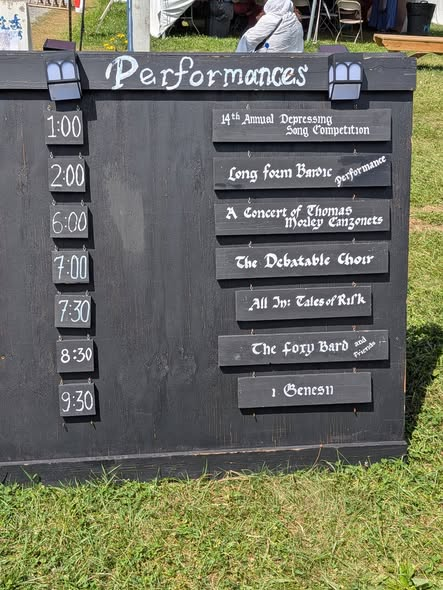
Then, that night… 6:00 pm rolled around and it was time. This concert felt easier than the concert at GNEW. This is why we have rehearsals right……RIGHT?!?!?!
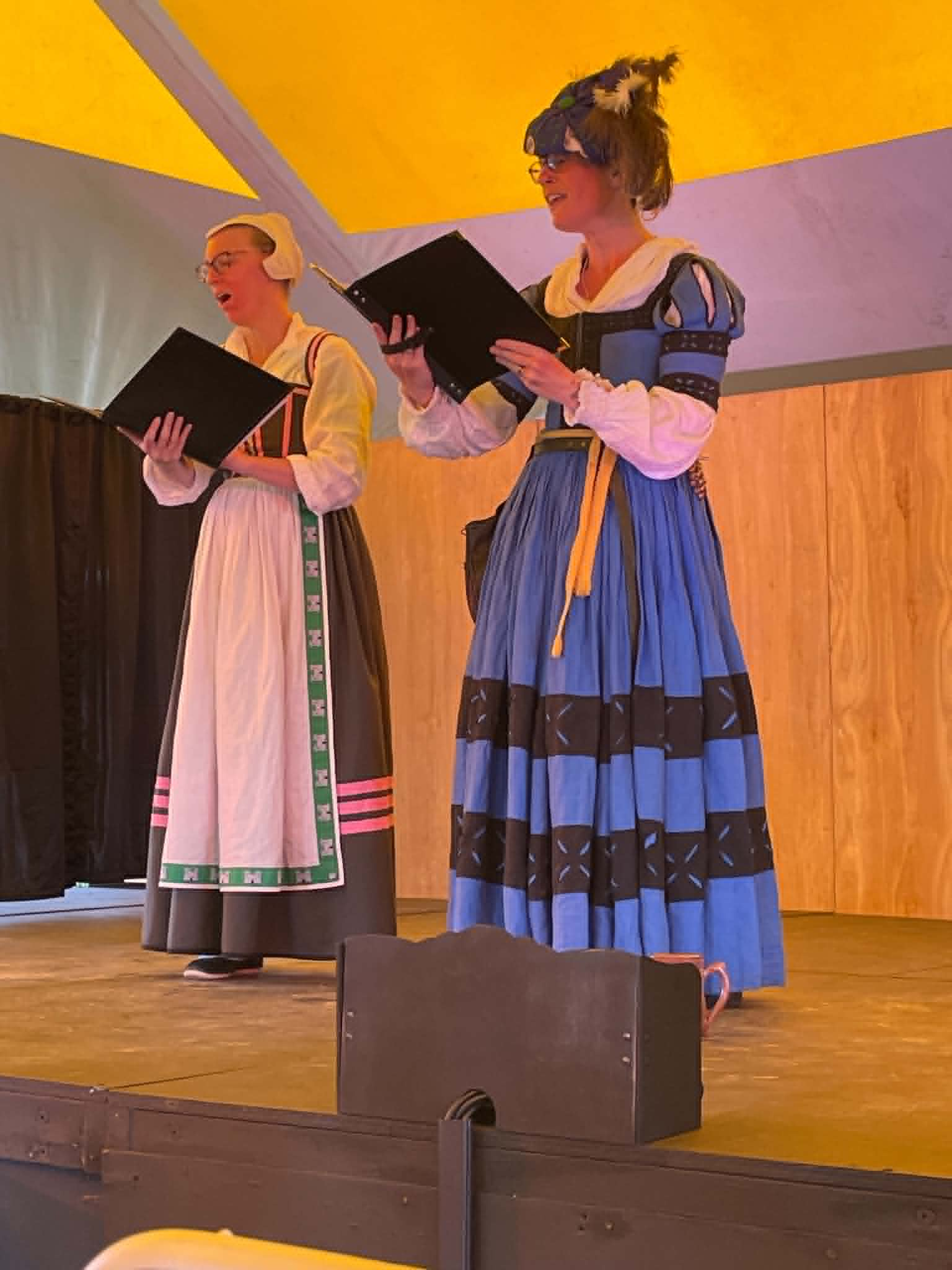
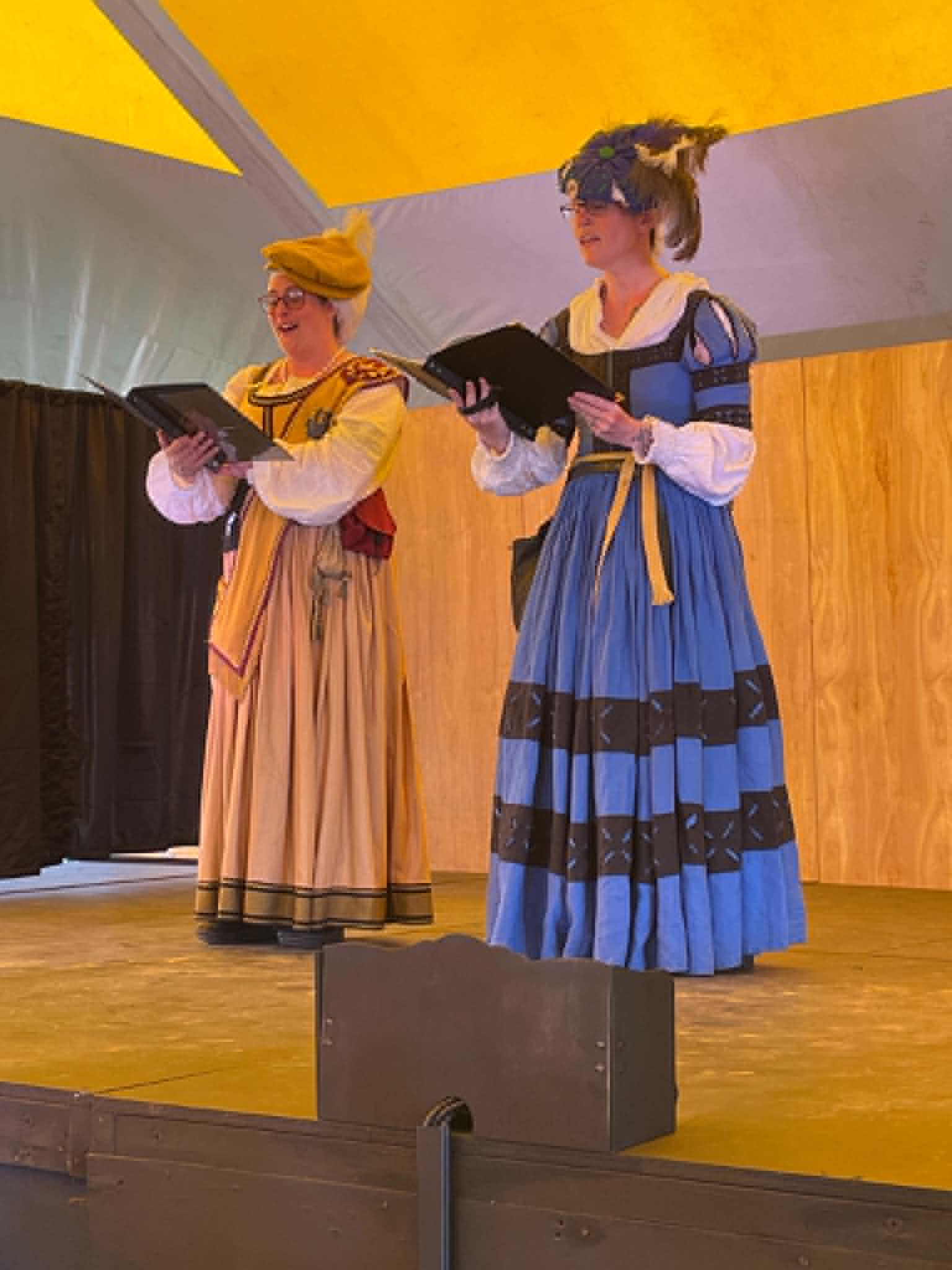
I have most of the concert here, but part of it was lost due to technical errors with recording… which is ok. We have -all- the pieces from GNEW.

Outside of court on Tuesday, where I had made 3 medallions for folks who are close to me, Wednesday was my last day of productivity for me and my music soul.

Wednesday was my Laurel, Sabine’s Birthday. We had talking about just getting together and playing and it just so happened that Wednesday worked out for me. I also invited Richard along because he could also use an outlet away from his 4 year old for a few hours. We ended up playing for about 2 hours and it was just so good!
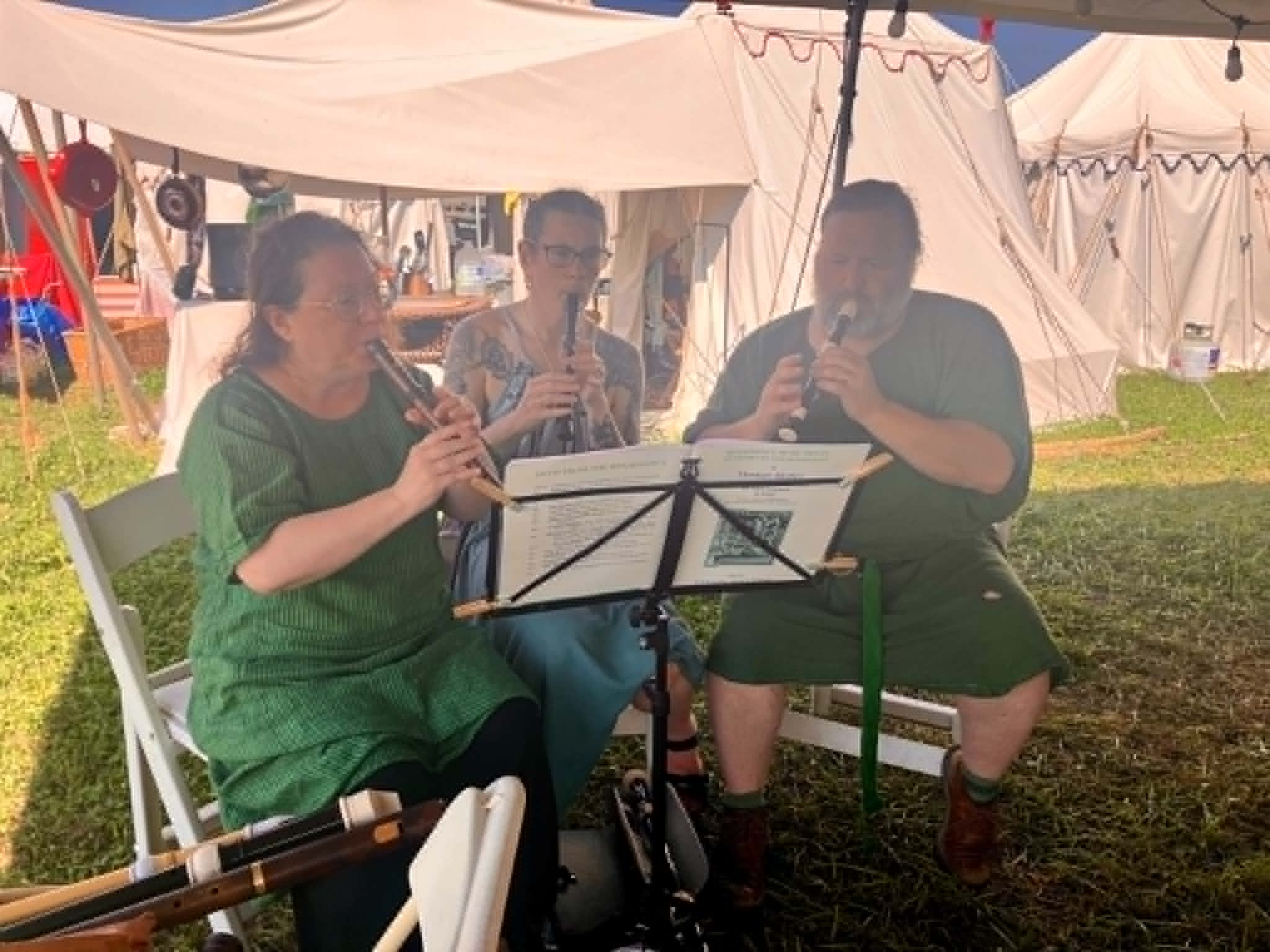
From there, I headed to my dear friend Emeline’s vigil where I sang for her and played recorder as background music. It filled my cup to be able to give the gift that she requested.

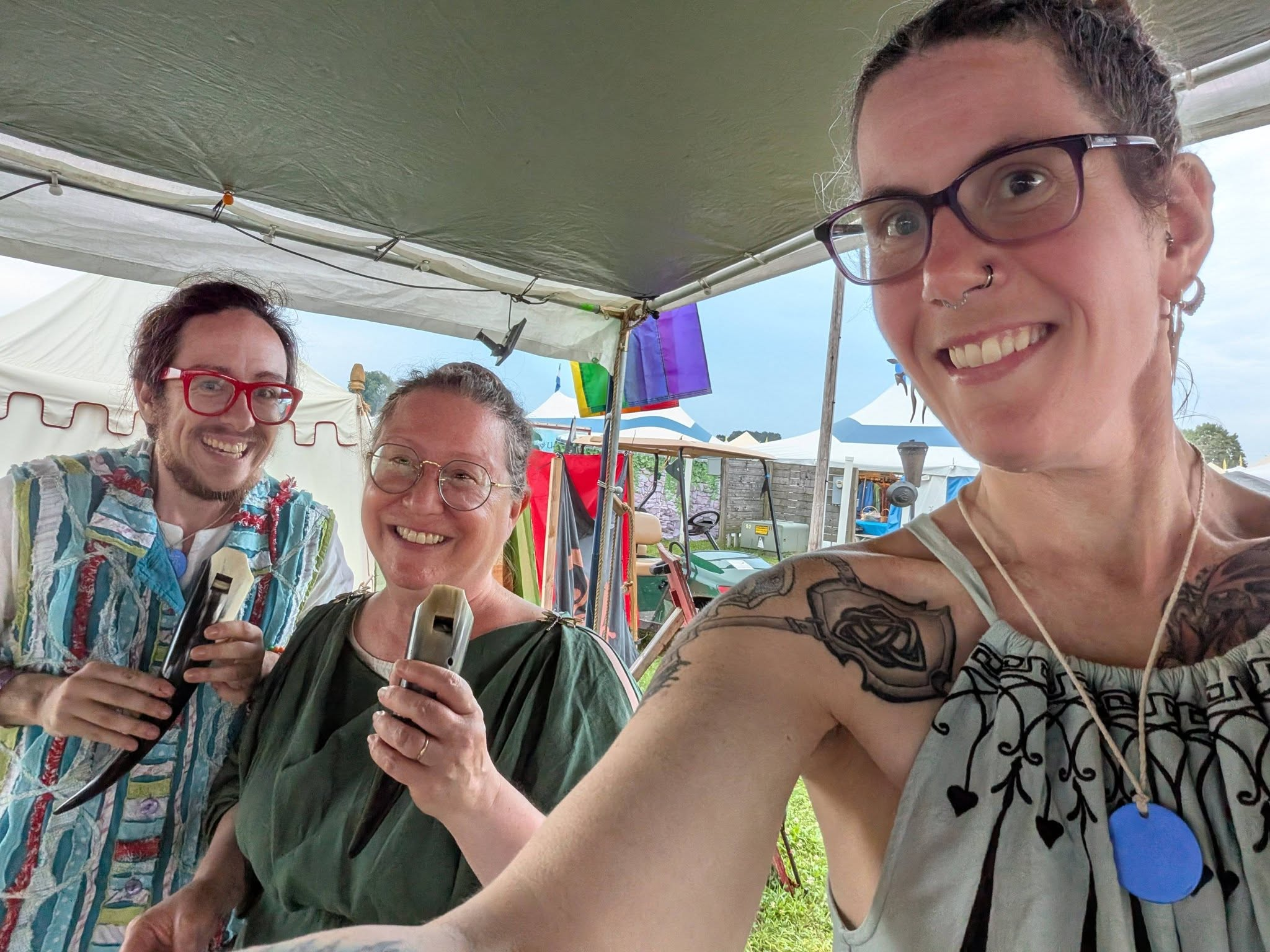
Later that evening, Sabine was hosting a more official jam session but I think the rain scared everyone away. Bird the Bard, who is also Sabine’s student, showed up and we got to rock out on gemshorns! This was only like my second time seriously getting to pick one up and play and it was such a joy. It is close to recorder on the fingerings that I was able to hold my own and jam out to cantigas. Another several hours of playing. My soul was just so full.
Thursday was my last day of fencing. I decided ahead of time that I was going to be fencing in the Cadet tournament. Where I am not officially a cadet, I still met the parameters of the tournament. I just needed someone to sponsor me. Cedric had offered to do so on one condition. I was to write the letter myself and it had to be an “interesting” letter, so I had a task set before me. Here is what I concocted Cadet Sponsor Letter.

I didn’t know there was anything special about the letters until I was pulled aside and told that my letter won the favorite letter of two gentles running the tournament. This meant I got to pick my first fight….. of 94 fencers. I went with whoever seemed eager because honestly, I knew maybe 10 of the 94 and my goal was to fight as many new folks as possible. I didn’t win the tournament, but winning the “Bardic” portion of the fencing tournament, I will take as a win. I left shortly after I lost my last life because the humidity was taking it’s toll on me but I’m still proud with how I did.

I will upload my pennsic concert when I get around to it, which should be shortly, but I wanted to get this up now before I lose my thoughts.
Just a little ditty

This weekend I attended Otter’s Welcome, which, if you have never been is a great event for new comers and recruitment into the SCA. As a chatelaine I do my best to support whatever demo’s are within a reasonable drive of me that looks like it could use more help. Early on site, I was approached and asked if I would be willing to sing for the I Sebastiani commedia troupe.

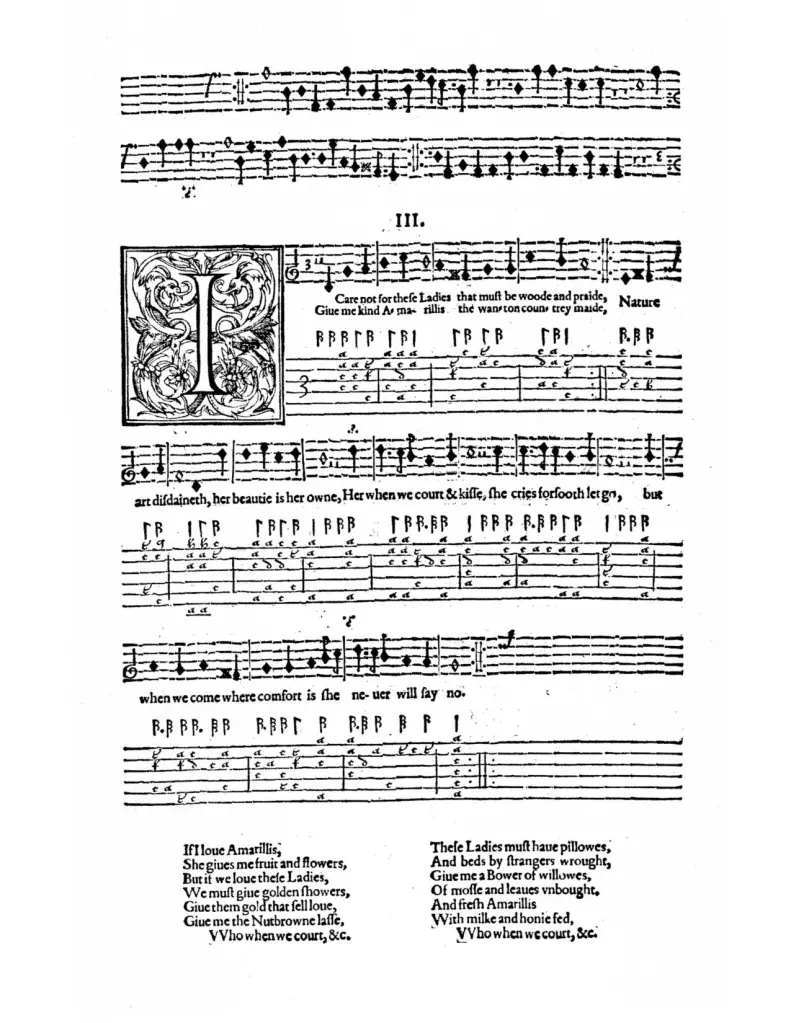
They asked me to sing something upbeat and happy. This, as many of you know, is not quite my repertoire but I think I had something up my sleeve. After digging through my book of songs (Bard Book) I came across a few, including 1 in Italian. Though, knowing what I knew about the show (which was the title), I chose to sing “I Care not for these ladies”. It wasn’t fresh in my brain because the last time I sang it was in October so I opted to use my book as part of my performance. I also want to state that I think it should be normalized that a performer can use their book and effectively as long as they are not buried in it.

Here is a link to the performance. You should watch the whole performance, not just me.

Mauche- Eamon Gray

We, King Donovan and Meghanta, Padshah Begum of these Eastern Lands, have not only heard the resounding praise sung far and wide of the wondrous scribal works of Eamon Grey, but have beheld them with Our own eyes—and in so doing, We are left in awe.

With a steady and unshakable hand, he breathes life into radiant illumination, laying gold and pigment with such brilliance and reverence that each page seems kissed by the sun itself, as though dawn had been captured and bound within the borders of his art. No flourish is too small, no detail too subtle to escape his keen and watchful attention, for his craft is guided by patience, devotion, and a mastery both rare and resplendent.

Yet it is in his calligraphy that he shines brightest of all: choosing the proper hand with wisdom and grace, he shapes every letter as though it were a jewel set into a crown—each stroke deliberate, elegant, and true. Thus are the important messages entrusted to him not merely written, but exalted: made clear as crystal, noble as proclamation, and worthy to endure in memory long after the ink has dried and the years have turned to legend.

Thus, do We induct him as a Companion of Our Order of the Maunche. Done this day at Kingdom Bardic Champions, in the Barony of Stonemarche, A.S. LX. 

Tyger’s Cub- Isaac of Malagentia

Some seek glory in bright deeds;

He sets eyes upon the quiet good,

the small acts that pass unmarked

yet hold the world together.

Among them we have marked Isaac of Malagentia,
whose hands are never idle
and whose path bends always
toward where the need is greatest.

When thirst stalks the field,
he bears water without fanfare,
cup after cup,
as steady as breath.
When hearth-fires call,
he works the kitchens,
hands invigorated with service,
asking no praise beyond the work done well.

We have seen him run swift as any shadow,
errands for merchants,
messages borne true,
small tasks that stitch a market whole.
We have seen him sit patient and intent,
stringing site tokens,
thread by careful thread,
so order may bloom from cloth and cord.

And when the day darkened—
when a child was lost,
fear skittering like mice in tall grass—
Isaac did not look away.
He searched, he called, he stayed,
until small hands were found
and hope returned to its place.

Such folk do not boast.
They do not linger in the light.
They are the quiet center of the camp,
the sure footing beneath many feet.

So do we, Donovan and Megha, King and Padshaw Begum, set these words down,
as a scholar sets down truth,
to name Isaac a Tyger’s Cub
a helper of all at a Market Day at Birka, A.S. LX ,
whose service binds our Dream together,
one small kindness at a time.

Consort’s Bardic Champ Scroll

Based on the poet, Mirabai and Bakti poetry.

I did not go seeking a voice,
yet yours was already chanting—
not for favor,
not for praise,
but because the story would not be silent.

Among many voices,
I heard yours rise,
steady and unafraid,
carrying memory where it was needed.

You were not taught to count applause.

You learned instead
to listen—
to the hush before the story,
to the breath that waits for music.

Let others chase renown;
you chase meaning.
You bind us together
with word and tune,
and the hall remembers itself.

So I set this mark upon you,
and I will not deny it.

By voice freely given
and song faithfully kept,
I, Meghanta,Padshah Begum of the East choose you______ as my bard—
called, witnessed, and named at the East Kingdom Bardic Championship

And in the year AS XL, I command you, play on.

I Care Not for These Ladies

Audio- I Care Not For These Ladies

Title: I Care Not for These Ladies
Composer: Thomas Campion (1567–1620)
Date: Early 17th Century (published 1601)
Type of Work: English lute song (ayre)
Source: A Booke of Ayres (1601)

I Care Not for These Ladies is a lute song composed by Thomas Campion, a prolific English composer, poet, and physician active during the late Elizabethan and early Jacobean periods. The piece appears in A Booke of Ayres, published in 1601—a collection co-authored with lutenist Philip Rosseter, representing the English art song tradition known as the ayre. An ayre (also spelled air, ayir, or ayre) is a type of solo song with instrumental accompaniment that was popular in England during the late Renaissance and early Baroque periods—roughly from the late 1500s to the early 1600s. (Boyd, Elizabethan Music and the Ayre, p. 42) Ayres typically had a clear melody, were strophic, expressive but not overly complex and finally were often were dealing with themes of love, nature, melancholy, or pastoral life. These songs were typically written for solo voice and lute accompaniment and were enjoyed in both courtly and domestic settings. (Greer, “Campion, Thomas,” Grove Music Online).


Campion’s work stood out for its graceful lyrical economy and integration of poetry and music. His ayres often featured simple, clear textures and a refined sense of word-setting.

“I Care Not for These Ladies” exemplifies Campion’s lyrical wit and poetic satire. It rejects the superficial charms of courtly women in favor of a more rustic and sensual ideal, in a tone both humorous and sharply critical of affectation. This theme of rejecting artificiality was common in Renaissance poetry, especially in contrast to the elaborate conventions of Petrarchan love. The poem is written in a light, playful tone, contrasting the courtly lady—requiring wealth, formal wooing, and luxury—with the “wanton country maid,” who offers affection without financial demands. Campion’s choice of plain diction reflects his poetic philosophy as stated in his treatise Observations in the Art of English Poesie (1602), where he argued against excessive ornamentation in favor of “a certain plainnesse and flowing measure.”

I care not for these ladies,
That must be wooed and prayed:
Give me kind Amaryllis,
The wanton country maid.
Nature art disdaineth,
Her beauty is her own.
Her when we court and kiss,
She cries, “Forsooth, let go!”
But when we come where comfort is,
She never will say no.

If I love Amaryllis,
She gives me fruit and flowers:
But if we love these ladies,
We must give golden showers.
Give them gold, that sell love,
Give me the nut-brown lass,
Who, when we court and kiss,
She cries, “Forsooth, let go!”
But when we come where comfort is,
She never will say no.

These ladies must have pillows,
And beds by strangers wrought;
Give me a bower of willows,
Of moss and leaves unbought,
And fresh Amaryllis,
With milk and honey fed;
Who, when we court and kiss,
She cries, “Forsooth, let go!”
But when we come where comfort is,
She never will say no.

This poem is a satirical rejection of courtly love conventions, favoring a more natural, earthy relationship over the artificial rituals of noble romance. The speaker dismisses the elaborate performances of upper-class women—those who “must be wooed and prayed”—in favor of a more direct and sensual bond with a rural maiden named Amaryllis.

Courtly Women represent artificiality, chastity performed as power, and romantic delay. Where as Amaryllis represents a pastoral, mythological name common in Renaissance poetry, symbolizing a more natural and sexual freedom.

“Nature art disdaineth” implies that true beauty comes from nature, not cosmetic or social artifice.

This stanza opens with a rejection of courtly ladies, who require elaborate rituals of wooing and begging. The speaker prefers Amaryllis, a common pastoral name symbolizing rustic, natural love. “Wanton country maid” conveys sexual openness but also innocence in contrast to the jaded court. The closing lines play with mock modesty: she resists at first (“let go!”) but ultimately consents (“never will say no”), a humorous portrayal of flirtation and desire common in Renaissance literature.

The “nut-brown lass” further invokes natural beauty—sun-kissed, not pale and powdered. The repetition of the refrain serves to reinforce the speaker’s preference for sincerity and physical closeness over ornament and pretense.

Court ladies require fancy “pillows” and beds “by strangers wrought” (i.e., expensive, manufactured luxuries). In contrast, the speaker desires a bower of willows—a simple natural shelter symbolizing freedom, intimacy, and peace.

“Milk and honey” alludes to pastoral abundance, drawing on biblical imagery (e.g., the Promised Land) and classical ideals of Arcadian pleasure. Again, the stanza ends with the comic mock-virginal protest followed by consent, emphasizing both Amaryllis’s modesty and her availability.

Amaryllis gives “fruit and flowers”—symbols of fertility, nature, and affection freely given. In contrast, the ladies of the court expect “golden showers”—interpreted in the 17th-century context as gifts of wealth, referencing materialism and even transactional love.The phrase “Give them gold, that sell love” is sharp: the speaker equates court ladies with prostitutes, or at least as women whose affection must be purchased.

Note: This flirtatious treatment of consent should be approached critically by modern performers—acknowledging the cultural context while avoiding romanticization of ambiguous consent.

Campion’s song reflects the Elizabethan and early Stuart shift from the Petrarchan model (idealizing women and love from afar) to a more ironic, earthly view of love. The use of a pastoral figure (Amaryllis) is typical of the time: country life was idealized as simpler, more honest, and more passionate. The poem is in dialogue with other poets of the age, like Christopher Marlowe (“Come live with me and be my love”) and Sir Walter Raleigh, who similarly contrast court and country values.

Sources and References:

  • Bullen, A. H., editor. Lyrics from the Song-Books of the Elizabethan Age. John C. Nimmo, 1887.
  • Campion, Thomas and Philip Rosseter. A Booke of Ayres, 1601. (Facsimiles and editions available through Early English Books Online and modern publishers)
  • Fellowes, Edmund H. English Lute Songs (Stainer & Bell)
  • Fortune, Nigel. “Campion, Thomas.” Grove Music Online. Oxford University Press.
    http://www.oxfordmusiconline.com (Access may require institutional login.)
  • Greer, David. Thomas Campion: Poems, Songs, and Masques (Oxford University Press)
  • Thomas, Raymond C. “The Function of Song in the Poetry of Thomas Campion.” Studies in Philology, vol. 55, no. 4, 1958, pp. 673–688. JSTOR, http://www.jstor.org/stable/4172933.
  • Sabol, Andrew, editor. The Songs and Masques of Thomas Campion. Harvard University Press, 1973.
  • Spring, Matthew. The Lute in Britain: A History of the Instrument and Its Music. Oxford University Press, 2001.
  • Tillyard, E. M. W. The Elizabethan World Picture. Chatto and Windus, 1943.
  • Thomas, Raymond C. “The Function of Song in the Poetry of Thomas Campion.” Studies in Philology, vol. 55, no. 4, 1958, pp. 673–688. JSTOR, http://www.jstor.org/stable/4172933.
  • Waller, Gary. English Poetry of the Sixteenth Century. Longman, 1986.
  • Woudhuysen, H. R., editor. The Penguin Book of Renaissance Verse 1509–1659. Penguin Books, 1992.

Stonemarche, Our Hearth, Our home, our Stead

I was asked several years ago to compose and athem for Stonemarche. I have had very little faith in my own compositions. The kingdom is filled with very many talented composers and who am I to try to be amongst them? It was brought up again that we needed an anthem and I finally got the gumption to write one. It’s not perfect and it’s a little quirky but so is our Barony.

Below is the recording of it’s first performance and the lyrics are below.

In the snow capped mountains
From far away lands
Dwelled the folks in 3 towers
Who wear white and green bands

We fence and loose arrows
We sing and we dance
See the gifts that we offer
Our love’s not a chance

We’ve a motto in Stonemarche,
There’s no famine we said,
In Stonemarche, Stonemarche
Our home, our hearth, our stead
We’ve a motto in Stonemarche,
There’s no famine we said,
In Stonemarche, Stonemarche
Our home, our hearth, our stead

Rolling lands rich with sheep
Cross the grass covered hills
A gift from lochleven
We tend to their wills

Cross the grass spanning lands
And as they wander and roam
Our children do gather
And bring them all home

We’ve a motto in Stonemarche,
There’s no famine we said,
In Stonemarche, Stonemarche
Our home, our hearth, our stead
We’ve a motto in Stonemarche,
There’s no famine we said,
In Stonemarche, Stonemarche
Our home, our hearth, our stead

If you come from the outside
If you dwell in our tillage
All around us are welcome
Inside our family’s village

Paint us up a bright chorus
Join our Bards in their song
We fight and we dance
No activity’s wrong

We’ve a motto in Stonemarche,
There’s no famine we said,
In Stonemarche, Stonemarche
Our home, our hearth, our stead
We’ve a motto in Stonemarche,
There’s no famine we said,
In Stonemarche, Stonemarche
Our home, our hearth, our stead

We’ve a motto in Stonemarche,
There’s no famine we said,
In Stonemarche, Stonemarche
Our home, our hearth, our stead
We’ve a motto in Stonemarche,
There’s no famine we said,
In Stonemarche, Stonemarche
Our home, our hearth, our stead

Minstrel’s Memory

I wrote this… I wrote all of this. Putting out songs of my own are terrifying. It took me until now to finally feel comfortable enough to publish this. This isn’t the best recording but that’s ok. Folks came in late, a spider was taken off me while performing BUT! people sang along. That is why I felt like posting this. I hope this song becomes an anthem for the Bards. This is about who sings for us when we are gone. Think a-la Hamilton, “Who Lives, Who Dies, Who Tells Their Stories”. Be brave. Sing your songs unashamedly.

Video taken by Jasmine Rochelle Goodspeed

I dreamt of a day when you sang a song
The song was spun for me
Instead of painting a warriors skills
Bardic tales were their decree

I hoped for the day when lauds and praise
For those who most enchant
Not the stories and words of those who berserked
Spoken out for those who can’t

Who will sing my song when I’m gone?
Who will tell my story?
Who’ll remember the days
And sing of the praise
Of the minstrel’s memory

If you would walk the streets at night
Or at a meal or ale
Hark! To those who weave the myths
Sing for them a jaunt wassail

Know you the tales of great Arthur
You have heard of Lancelot
Epic deeds rhymed in memory fair
But the bringers oft forgot

Chorus x2

The sun will rise and the moon will fall
As time will wane and pass
To the memory of those before
We all should raise a glass

To the bringers of the melody
When their bodies live no more
A chorus sung to bring their name
And conjure spirits to restore

Chorus 3x

Of the minstrel’s memory x3

Singing in the newest Laurel

I have done several boasts this year. All of them have been hand crafted by me, but this time, I had been asked to do a different task. This time, my friend, Lisabetta, did not wish to be lauded as she entered court. She simply wanted to be sang in.

I was contacted about a week before the event via email by her grace, Marieke asking me if I would be willing to perform this task (No pun intended). She said that it wasn’t a specific piece, but Lisabetta would like it to be in Italian.

I had a couple pieces in my back pocket, super memorized, but nothing that really captured Lisabetta and what -she- would have wanted. So, I did a bit of thinking. Lisabetta is female artisan who has worked her entire life to be the incredible, warm and well versed in her art. Although her persona is not 16th century (or atleast, I don’t think) I feel like she would have loved the music of the 16th century and Isabelle D’Este, who was the reason why women in the 16th century were able to have a viable career. She loved madrigals and so I pulled out my book of Madrigals and picked out “O Occhi Manza Mia”.

I had been heralding all day in the cold so seeing if I still had a voice was a thing. Here is the translation.

O occhi, manza mia, cigli dorati,
o faccia d’una luna stralucente,
Tienemi mente,
gioia mia bella,
Guardam’un poc’a me, fami contiento.
O bocca come zuccaro impanato,
o canna che specchiare fai la gente,
Tienimi…
O cuore, manza mia, perfido cuore.
tu sei la gioia mia, lo mio amore!
Tienimi…


Oh my beloved’s eyes, set in gold-blond lashes,
oh face more luminous than the moon,
Keep me in mind,
my lovely treasure,Look upon me for a little while, and keep me happy.
Oh mouth like sugarloaf,
oh throat, that brings crowds in to suckle,
Keep me…
Oh heart, my beloved, most perfidious of hearts,
you are my treasure, you are my love!
Keep me…

Oh yeah… I also read the scroll.. because I could.

Composer: Orlando di Lasso

Language: Italian

First published: 1581 in Libro de villanelle, moresche et altre canzoni, no. 15